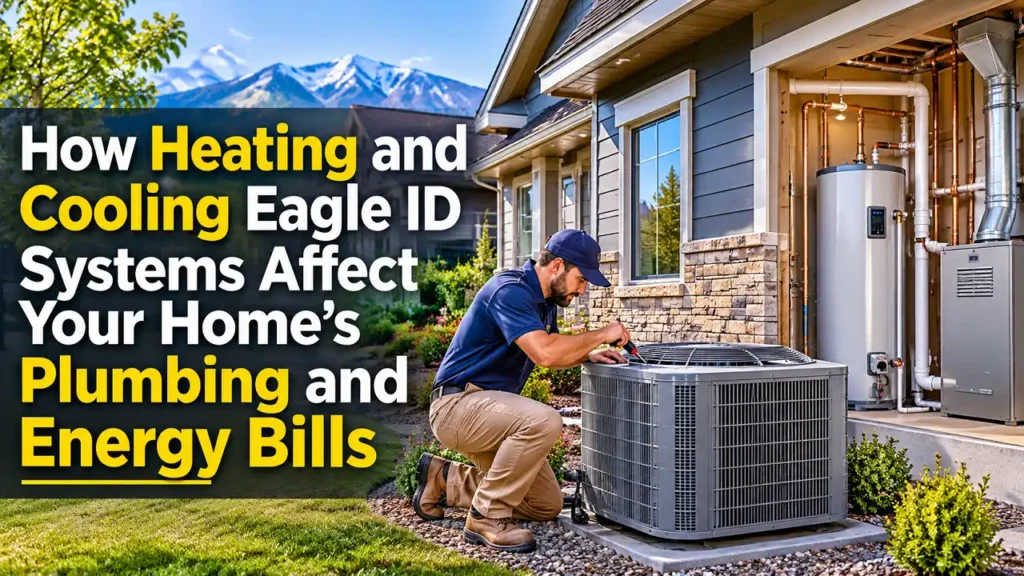
Your furnace, air conditioner, and water heater all depend on water, drains, and pipes to run safely. When you think about heating and cooling Eagle ID homes, you probably picture thermostats and ductwork. The plumbing side matters just as much. A clogged condensate line can flood a basement in July. A scaled-up water heater can waste energy all winter.
A frozen pipe near an exterior wall can turn a cold snap into a $10,000 repair. Your comfort systems and your plumbing work as one system, so a problem in one quickly becomes a problem in the other.
Key Takeaways
- Hard water in the Treasure Valley shortens the life of water heaters, tankless units, and humidifiers. Annual flushing and water treatment protect your investment.
- Freeze protection starts when outdoor temperatures drop toward 20°F. Insulate exposed pipes, disconnect hoses, and keep heat above 55°F when you travel.
- Water heating is one of the largest energy costs in your home. Choosing the right water heater can save you hundreds of dollars each year.
Why Heating and Cooling Starts With Plumbing
Heating and cooling systems rely on plumbing connections. Nearly every HVAC system in an Eagle home ties into a drain, a water line, or a gas line. When those connections fail, the comfort system fails with them.
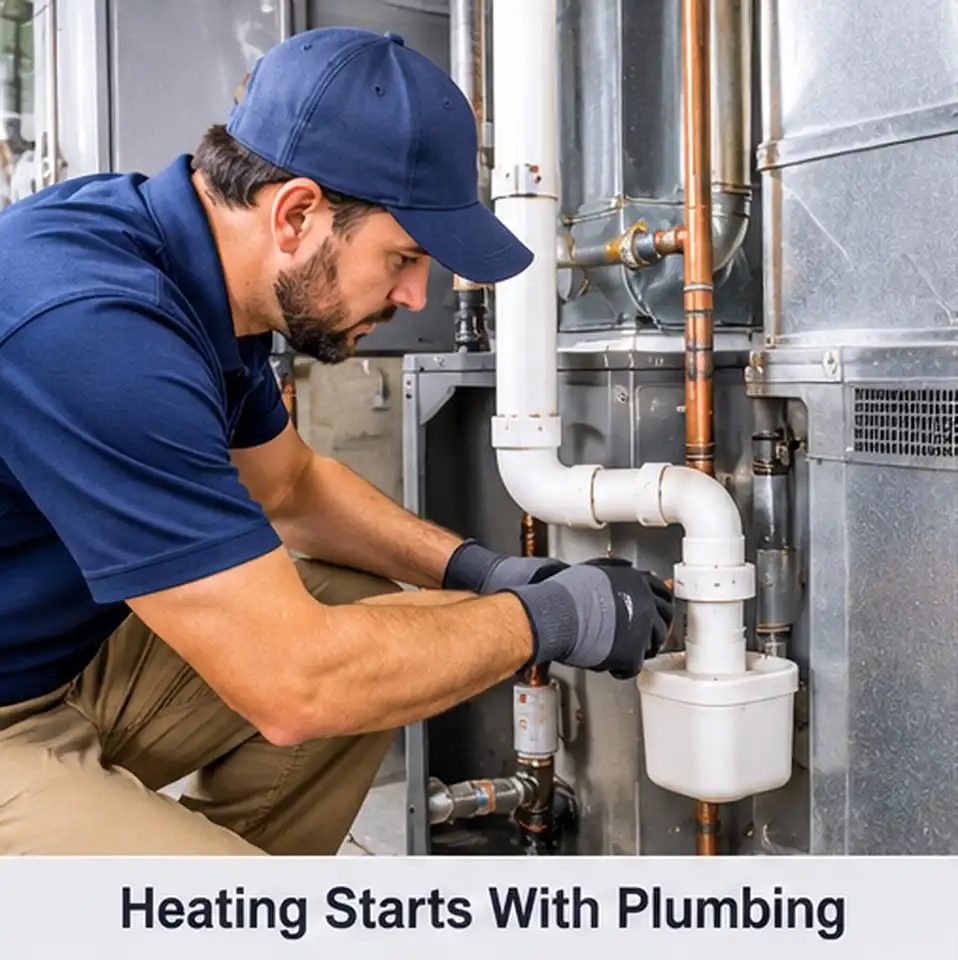
On recent service calls in Eagle, our crews traced many “HVAC problems” back to simple plumbing faults. A furnace shut down because its condensate trap clogged. An AC tripped its float switch because the drain line filled with algae. These are not equipment failures. They are plumbing failures that look like equipment failures.
If your system is due for an upgrade, a professional water heater installation is often the smartest first step, since water heating ranks among your biggest energy expenses.
| Comfort Component | Plumbing Connection | Common Failure We See |
|---|---|---|
| High-efficiency furnace (90%+ AFUE) | Condensate drain and trap | Clogged trap shuts down heat |
| Central air conditioner | Evaporator condensate line | Algae clog causes ceiling leaks |
| Heat pump | Defrost condensate drainage | Ice buildup at outdoor unit |
| Whole-home humidifier | Cold water supply line | Scale clogs the water panel |
| Boiler / radiant floor heat | Closed water loop, expansion tank | Pressure loss, leaking valves |
| Tank or tankless water heater | Supply, relief valve, gas or vent | Scale, sediment, relief valve drips |
Your next step: walk through your mechanical room and identify every drain line and water line connected to your equipment.
Check Also: Emergency Plumber Meridian: How to Stop Water Damage Fast and What It Means for Your Home
Eagle’s Climate: What Your Systems Face Each Year
Eagle’s climate puts heavy demands on both heat and AC. The Treasure Valley sees hot, dry summers with highs often in the 90s, and cold winters with overnight lows in the 20s. Cold snaps can push temperatures into the single digits or below zero.
If you’ve spent a winter in Idaho, protecting your pipes makes complete sense. Wide temperature swings stress pipes, fittings, and water heaters. Your equipment works hard in both directions.
| Season | Comfort Demand | Plumbing Risk | Priority Task |
|---|---|---|---|
| Winter (Dec-Feb) | Furnace or heat pump runs daily | Frozen pipes, hose bib bursts | Insulate and drain outdoor lines |
| Spring (Mar-May) | Light heating and cooling | Sprinkler startup leaks | Inspect backflow and valves |
| Summer (Jun-Aug) | AC runs long cycles | Condensate clogs, overflow | Flush AC drain line |
| Fall (Sep-Nov) | Heating restarts | Water heater strain rises | Flush tank, test relief valve |
Each season brings a different risk. Planning around the calendar costs less than reacting to an emergency.
Your next step: put a seasonal maintenance reminder in your phone for the first week of each quarter.
Hard Water and Your Heating Equipment
Hard water damages heating equipment from the inside. Hardness (the amount of dissolved calcium and magnesium in water) leaves mineral scale on anything that heats water. Scale acts like insulation, forcing your burner or heating element to work longer.
The U.S. Geological Survey hardness scale classifies water by its mineral content. Many Treasure Valley homes, including wells around Eagle, test in the hard to very hard range. Our plumbers frequently see this in older Boise homes, where tanks fail years ahead of schedule.
| Hardness Level (USGS) | mg/L as Calcium Carbonate | Effect on Heating Equipment |
|---|---|---|
| Soft | 0-60 | Minimal scale |
| Moderately hard | 61-120 | Slow buildup; flush yearly |
| Hard | 121-180 | Noticeable scale; flush every 6-12 months |
| Very hard | Over 180 | Rapid scale; treatment strongly advised |
Signs Hard Water Is Hurting Your System
- Popping or rumbling sounds from the water heater
- White crust on faucets, showerheads, and humidifier pads
- Slower hot water recovery after showers
- Tankless error codes for overheating or flow problems
- Higher gas or power bills with no change in usage
A single quarter inch of scale can noticeably cut heat transfer efficiency. A water softener or scale inhibitor protects your water heater, humidifier, and boiler at the same time.
Your next step: buy a home hardness test strip or request a water test before your next equipment purchase.
Check Also: Sewer Line Installation Kuna ID: How to Plan a Code-Ready Line That Lasts for Decades
Water Heaters: The Heating System Most Homeowners Forget
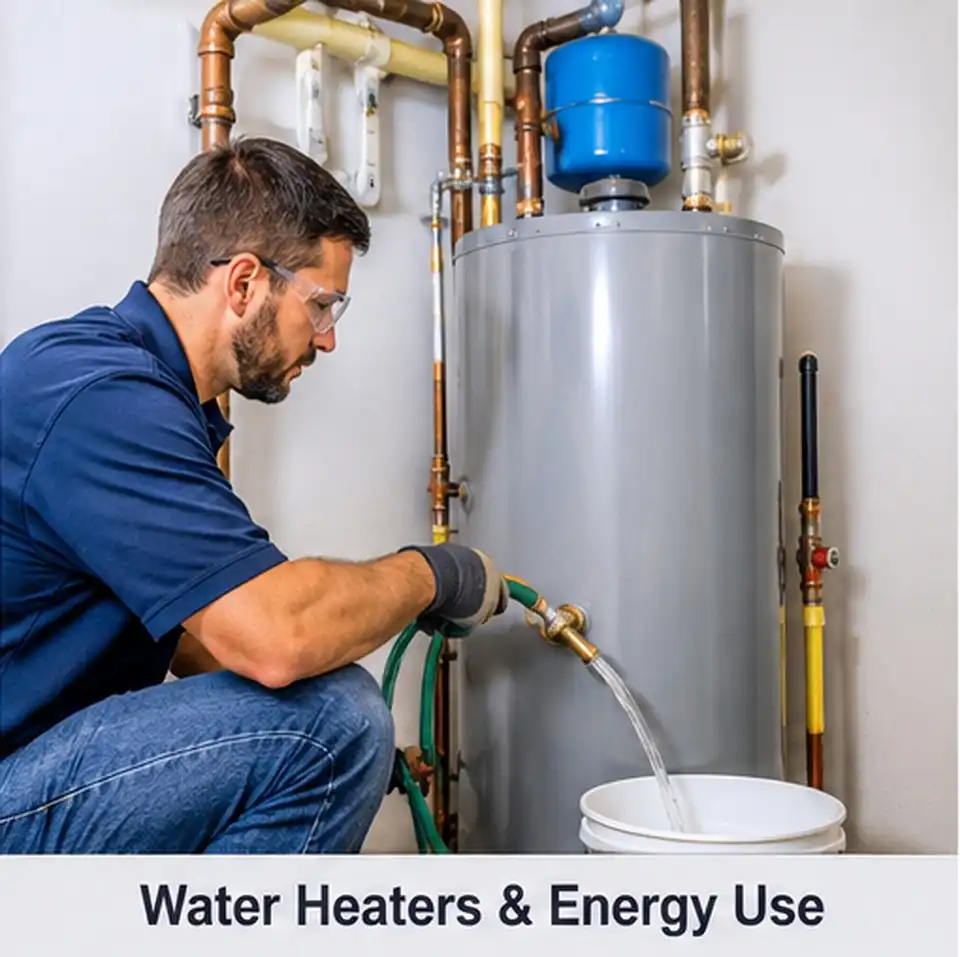
Your water heater is a heating system. It burns gas or uses electricity every day, all year. According to the U.S. Department of Energy, water heating accounts for about 18% of a typical home’s energy use. That makes it the second-largest energy expense after space heating and cooling.
Picking the right water heater type matters for Eagle homes. Tank models cost less upfront. Tankless units save space but need annual descaling here. Heat pump water heaters use far less electricity, and the DOE rates them two to three times more efficient than standard electric tanks.
Water Heater Comparison for Treasure Valley Homes
| Type | Typical Lifespan | Efficiency (UEF) | Hard Water Sensitivity | Best For |
|---|---|---|---|---|
| Gas tank | 8-12 years | 0.58-0.70 | Moderate | Budget replacements |
| Electric tank | 10-13 years | 0.90-0.95 | Moderate (elements scale) | Homes without gas |
| Tankless gas | 15-20 years | 0.81-0.97 | High; descale yearly | Large families, small spaces |
| Heat pump (hybrid) | 10-15 years | 3.0+ | Moderate | Garages, low power bills |
UEF (Uniform Energy Factor) measures how efficiently a water heater turns energy into hot water. Higher numbers mean lower bills.
Water Heater Settings That Save Money
- Set the thermostat to 120°F, the DOE’s recommended setting for most homes.
- Insulate the first six feet of hot and cold pipes at the heater.
- Flush the tank once a year to remove sediment.
- Test the T&P valve (temperature and pressure relief valve) every fall.
- Check the anode rod every two to three years in hard water areas.
Your next step: check your water heater’s data plate for its manufacture date and capacity.
Heating and Cooling Eagle ID Cost: What to Budget
Costs depend on equipment type, home size, and existing plumbing. Searches for heating and cooling Eagle ID cost usually focus on furnaces and AC units. The plumbing work around them deserves a line in your budget too.
The ranges below reflect typical Treasure Valley pricing. Your quote will vary with brand, access, permits, and code upgrades.
Plumbing-Related Heating and Cooling Costs
| Service | Typical Cost Range | Notes |
|---|---|---|
| Condensate line cleaning | $100-$250 | Often part of a tune-up |
| Condensate pump replacement | $200-$450 | Needed for basement furnaces |
| Water heater flush | $100-$200 | Annual in hard water areas |
| Gas tank water heater replacement | $1,600-$3,500 | 40-50 gallon, installed |
| Tankless water heater installation | $3,000-$6,500 | Higher if gas line upsizing needed |
| Heat pump water heater installation | $2,800-$5,500 | Utility rebates may apply |
| Humidifier water line install | $150-$400 | Includes saddle or tee valve |
| Frozen pipe repair | $250-$1,500+ | Water damage costs extra |
| Whole-home water softener | $1,500-$4,000 | Protects all heating equipment |
HVAC Equipment Cost Ranges
| Equipment | Typical Installed Range | Lifespan |
|---|---|---|
| Gas furnace | $4,000-$9,000 | 15-20 years |
| Central AC | $5,000-$11,000 | 12-15 years |
| Heat pump system | $7,000-$15,000 | 10-15 years |
| Ductless mini-split (per zone) | $3,500-$7,000 | 12-20 years |
| Boiler | $6,000-$12,000 | 15-30 years |
What Raises the Price
- Code upgrades to venting, gas lines, or drains
- Tight crawlspace or attic access
- Permit and inspection fees
- Premium brands and extended warranties
- Emergency or after-hours service
At Meridian Plumbing Services, we give written, upfront quotes before work begins. You should never see a surprise line item on your final bill. Idaho Power and Intermountain Gas offer rebates on some efficient equipment, and their programs change often.
Your next step: check current rebates on your utility’s website before you request quotes.
Check Also: Hardin Valley Water Line Repair: Spot the Signs, Compare Costs, and Protect Your Home
Repair vs. Replace: Making the Right Call
Repair or replace depends on age, repair cost, and efficiency. A popular rule of thumb is the $5,000 rule: multiply the unit’s age by the repair cost. If the total tops $5,000, replacement usually makes more financial sense.
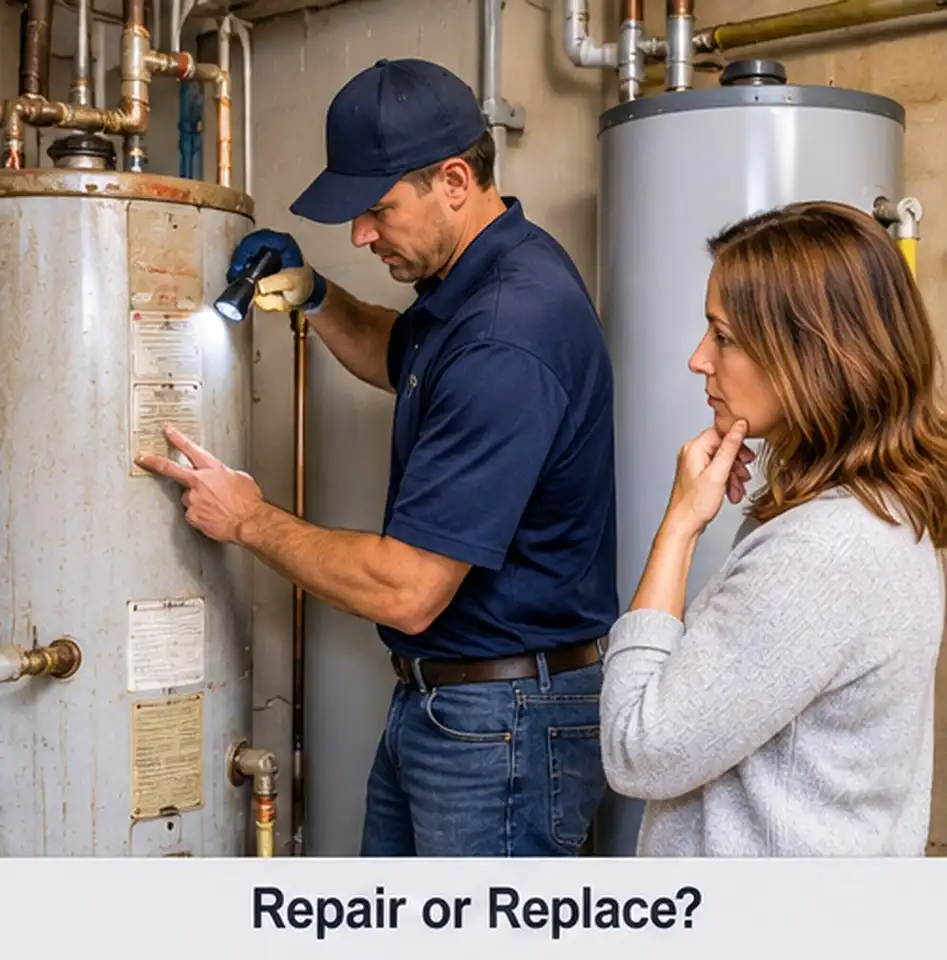
For example, a 12-year-old water heater needing a $500 repair scores 6,000. That points toward replacement. A 4-year-old furnace needing a $300 part scores 1,200. Repair it.
| Equipment | Repair If… | Replace If… |
|---|---|---|
| Tank water heater | Under 8 years, part failure only | Tank leaks, rust in water, over 10 years |
| Tankless water heater | Sensor or igniter fault | Heat exchanger cracked, over 15 years |
| Furnace | Igniter, flame sensor, condensate issue | Cracked heat exchanger, over 18 years |
| Central AC | Capacitor, drain line, contactor | Compressor failure, R-22 refrigerant |
| Boiler | Valve, pump, or expansion tank | Leaking heat exchanger, over 25 years |
Repair: Pros and Cons
Pros
- Lower upfront cost
- Faster fix, often same day
- No new permits in most cases
Cons
- Older units keep losing efficiency
- Repeat breakdowns add up
- Parts availability drops with age
Replace: Pros and Cons
Pros
- Lower energy bills
- New warranty coverage
- Better comfort and reliability
Cons
- Higher upfront cost
- Possible code upgrades to venting or gas lines
- Longer project timeline
Your next step: write down the age of every major appliance and run the $5,000 rule on any pending repair.
Efficiency Ratings Explained
Efficiency ratings tell you what you pay to run a system. Each rating applies to a different type of equipment. Comparing quotes for heating and cooling Eagle ID projects gets easier when you know what the numbers mean.
| Rating | What It Measures | Applies To | Current Federal Minimum (Idaho) | Better Target |
|---|---|---|---|---|
| AFUE | Percent of fuel turned into heat | Furnaces, boilers | 80% (non-weatherized gas furnace) | 95%+ |
| SEER2 | Cooling efficiency over a season | AC, heat pumps | 13.4 (split AC, North region) | 15-17+ |
| HSPF2 | Heating efficiency of heat pumps | Heat pumps | 7.5 | 8.5+ |
| UEF | Water heating efficiency | Water heaters | Varies by type and size | ENERGY STAR certified |
Idaho falls in the North region under federal efficiency standards. That means a lower SEER2 minimum for AC than southern states. Our cold winters make AFUE and HSPF2 matter more here.
High-efficiency furnaces create acidic condensate, so they always need a working drain. That is a plumbing requirement many homeowners never hear about.
Your next step: ask every contractor to list AFUE, SEER2, and HSPF2 ratings on their written quote.
Winter Freeze Protection for Eagle Homes
Freeze protection keeps your plumbing and heating running through January. Pipes in exterior walls, crawlspaces, and garages face the highest risk. Research cited widely in the plumbing industry places the danger zone at about 20°F outside for uninsulated pipes.
On recent service calls in Meridian and Eagle, we repaired burst lines behind kitchen sinks and in unheated bonus rooms. Many leaks stayed hidden inside walls for days. Professional leak detection finds those hidden breaks before they rot subfloors or grow mold.
Freeze Prevention Checklist
- Disconnect garden hoses before the first hard freeze.
- Install insulated covers on outdoor hose bibs.
- Wrap exposed pipes in crawlspaces and garages with foam sleeves.
- Seal air leaks near pipes with caulk or spray foam.
- Open cabinet doors under sinks on exterior walls during cold snaps.
- Let faucets drip slowly when temperatures fall below 20°F.
- Keep the thermostat at 55°F or higher when you travel.
- Blow out sprinkler lines every fall.
- Locate your main shutoff valve so you can act fast.
What to Do If a Pipe Freezes
- Shut off the main water if you suspect a burst.
- Open the faucet on the frozen line to relieve pressure.
- Warm the pipe with a hair dryer or space heater, starting near the faucet.
- Never use an open flame on pipes.
- Call a plumber if you can’t reach or thaw the frozen section.
Your next step: find and label your main water shutoff valve today.
Check Also: Water Extraction Meridian ID: How to Stop Water Damage Before Mold Takes Hold
Summer Cooling and AC Condensate Drains
Your AC removes gallons of water from indoor air each day. That water drains through a condensate line to a floor drain, a condensate pump, or outside. Even in dry Idaho air, a central AC can produce several gallons daily during peak cooling.
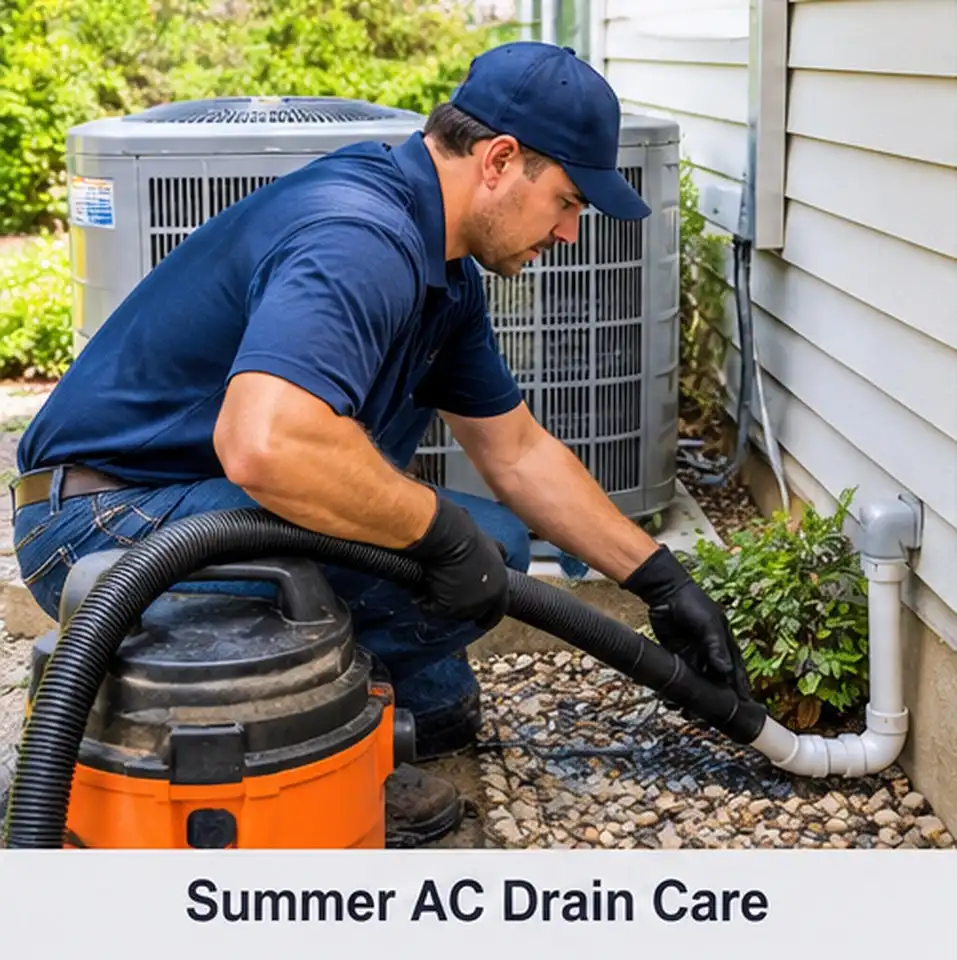
Algae and dust build up inside the line. When it clogs, water backs into the drain pan. A float switch may shut the AC off, or water may overflow onto ceilings and floors.
Steps to Troubleshoot an AC Drain Problem
- Turn off the AC at the thermostat.
- Check the drain pan for standing water.
- Find the access port on the condensate line, usually a T-fitting with a cap.
- Pour one cup of distilled vinegar into the line to break up algae.
- Use a wet/dry vacuum on the outdoor end to pull out clogs.
- Test the condensate pump by pouring water into its reservoir.
- Restart the AC and watch for steady drainage.
Vinegar flushes every three months keep most drain lines clear. If water keeps backing up, the line may be sagging or improperly sloped.
Your next step: add a vinegar flush to your calendar for June 1 and September 1.
Quick Troubleshooting Guide
Most comfort problems show clear symptoms. This table helps you sort DIY fixes from professional calls.
| Symptom | Likely Cause | Safe DIY Step | Call a Pro When… |
|---|---|---|---|
| Water around furnace | Clogged condensate trap or line | Clear line with vinegar | Leak returns within days |
| No hot water | Pilot out, tripped breaker, failed element | Relight pilot per label, reset breaker | Gas smell or repeated failure |
| Rumbling water heater | Sediment buildup | Flush the tank | Leaks or rust appear |
| AC shuts off in heat | Float switch triggered | Empty pan, clear drain | Pan fills again quickly |
| Low water pressure | Scale in fixtures or frozen line | Clean aerators | Pressure stays low house-wide |
| Humidifier not working | Scaled water panel or closed valve | Replace pad, open valve | Water line leaks |
| Gas smell | Leak at appliance or line | Leave home immediately | Always: call gas utility and 911 |
| Rising water bill | Hidden leak | Check meter with taps off | Meter moves with no water use |
Your next step: do the water meter test tonight with every fixture turned off.
Seasonal Maintenance Checklist
Regular maintenance prevents most emergencies. These tasks take minutes and protect your furnace, AC, and water heater together.
Fall (Before Heating Season)
- Replace the furnace filter (ENERGY STAR advises checking monthly and changing at least every 3 months)
- Flush the water heater
- Test the T&P valve
- Clean the humidifier pad
- Inspect the furnace condensate trap
Winter
- Check filters monthly
- Monitor exposed pipes during cold snaps
- Clear snow from furnace and water heater vents
Spring
- Inspect sprinkler backflow devices
- Turn off the humidifier water valve
- Schedule an AC tune-up
Summer
- Flush AC condensate lines
- Rinse the outdoor condenser coil with a garden hose
- Check the condensate pump for noise or leaks
Your next step: print this list and tape it inside your utility room door.
How to Evaluate Heating and Cooling Eagle ID Reviews and Complaints
Good reviews reveal patterns, not just star ratings. When you read heating and cooling Eagle ID reviews, look for details about communication, pricing, and follow-up service. A few negative reviews are normal. How the company responds tells you more.

Many homeowners search brand names like AirCare heating and cooling Eagle ID to compare local providers. That’s a smart move. Compare several companies the same way, using the same criteria.
What to Look For in Reviews
- Specific technician names and job details
- Upfront pricing mentioned by customers
- Repeat customers over several years
- Professional owner responses to criticism
- Recent reviews, not just older ones
How to Research Heating and Cooling Eagle ID Complaints
- Search the Better Business Bureau for complaint history and resolutions.
- Verify licensing through the Idaho Division of Occupational and Professional Licenses (DOPL), which licenses HVAC and plumbing contractors.
- Confirm insurance by asking for a certificate of liability coverage.
- Read 1-star and 3-star reviews for repeated themes.
- Check the Idaho Attorney General’s consumer protection resources if a dispute goes unresolved.
Red Flags
- Pressure to sign the same day
- No written estimate
- Cash-only payment requests
- Replacement pushed before diagnosis
- No license number on the quote or vehicle
Your next step: verify any contractor’s license on the DOPL website before you schedule a visit.
Finding Heating and Cooling Eagle ID Near Me Services
Local contractors respond faster and know local codes. Searching heating and cooling Eagle ID near me brings up dozens of options across the Treasure Valley. Narrow the list with a few smart questions.
| Question to Ask | Why It Matters |
|---|---|
| Are you licensed in Idaho? | Required for HVAC and plumbing work |
| Do you offer 7-day or emergency service? | Breakdowns don’t wait for Monday |
| Is your estimate written and itemized? | Protects you from surprise charges |
| Do you pull permits? | Required for most replacements |
| What warranty do you offer on labor? | Shows confidence in workmanship |
| Do you handle the plumbing connections? | Avoids gaps between trades |
Choosing a local team for heating and cooling Eagle ID work means quicker response times in January and July. It also means a crew that knows our hard water and freezing temperatures firsthand.
Your next step: shortlist three local companies and ask each the questions above.
Where Meridian Plumbing Services Fits In
We handle the plumbing side of your comfort systems. Every heating and cooling Eagle ID setup relies on water lines, drains, gas connections, and water heaters. That’s our daily work across Eagle, Meridian, Boise, and Nampa.
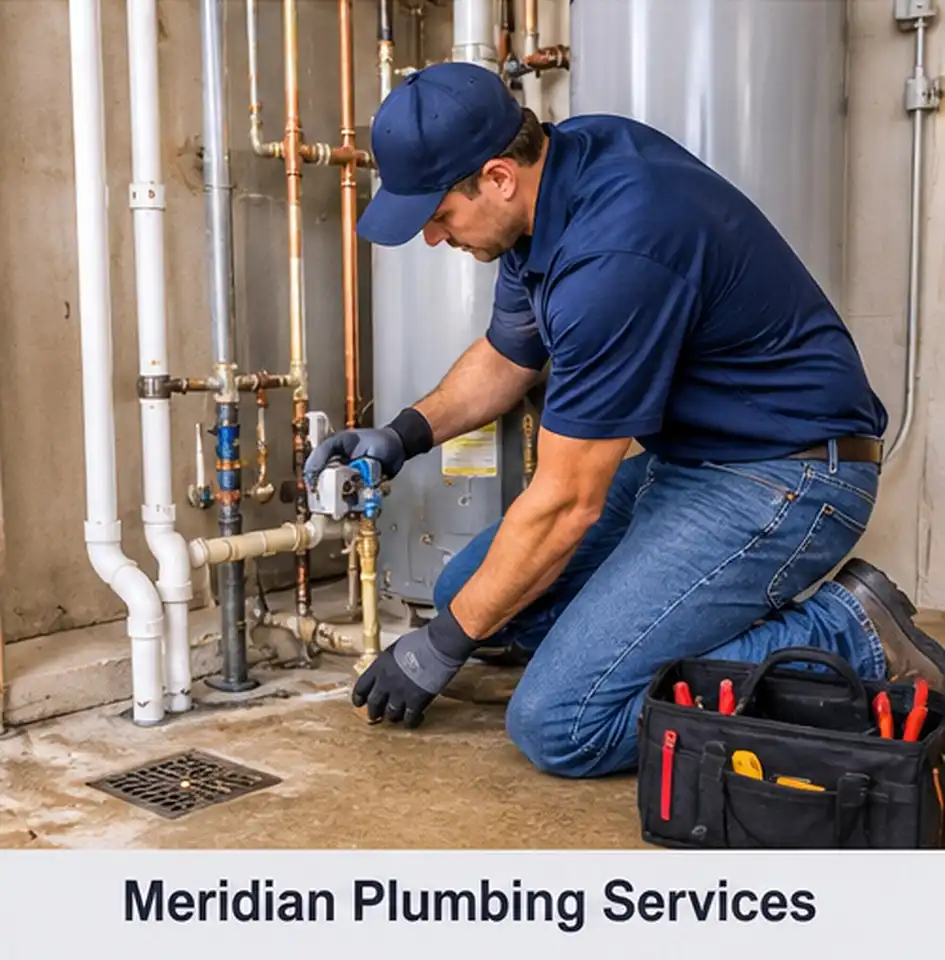
Our crews install and repair water heaters, clear condensate and floor drains, track down hidden leaks, and repair frozen pipes. When a burst line or failed water heater can’t wait, our emergency plumber team responds 7 days a week. We explain every repair in plain language before we pick up a tool.
| What We Handle | Example Jobs |
|---|---|
| Water heaters | Tank, tankless, and heat pump installs and repairs |
| Drains | Condensate drains, floor drains, main lines |
| Leak detection | Hidden slab, wall, and ceiling leaks |
| Freeze damage | Burst pipe repair and re-routing |
| Water quality | Softener and filtration plumbing |
| Commercial plumbing | Mechanical room and boiler piping |
Your next step: schedule a water heater and plumbing check before the next cold snap arrives.
FAQs
1. How much does heating and cooling cost in Eagle?
- Furnace replacement runs about $4,000-$9,000.
- Central AC replacement runs about $5,000-$11,000.
- Plumbing-related work like water heater replacement ranges from $1,600 to $6,500.
2. Why does my furnace leak water?
High-efficiency furnaces produce condensate. A clogged trap or drain line causes leaks. Clear the line or call a pro.
3. How often should I flush my water heater in Eagle?
Once a year at minimum. Homes with very hard water benefit from flushing every six months.
4. Is a heat pump water heater worth it in Idaho?
Yes, for most homes with garage or basement space. The DOE rates them two to three times more efficient than standard electric tanks.
5. What temperature causes pipes to freeze?
Uninsulated pipes face real risk when outdoor temps hit about 20°F. Pipes in exterior walls and crawlspaces freeze first.
6. Does hard water affect my HVAC system?
It affects water heaters, humidifiers, and boilers directly. Scale cuts efficiency and shortens equipment life.
7. How do I know if a contractor is licensed in Idaho?
Search the contractor’s name on the Idaho DOPL license lookup website.
8. Should I repair or replace my 12-year-old water heater?
Use the $5,000 rule. Most tank heaters over 10 years old in hard water areas are better candidates for replacement.
Protect Your Comfort by Protecting Your Pipes
Comfort systems last longer when the plumbing behind them stays healthy. Clear drains, treated water, insulated pipes, and an efficient water heater cut energy bills and prevent emergencies. Small seasonal tasks deliver the biggest savings.
At Meridian Plumbing Services, we see the same pattern every year: homeowners who maintain their plumbing avoid most winter and summer breakdowns. Prevention always costs less than water damage.
Your next step: test your water hardness, check your water heater’s age, and book your fall plumbing inspection this week.