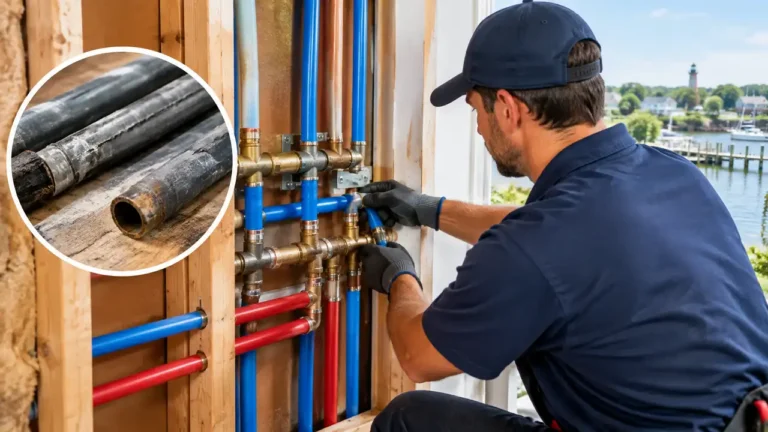
How Repiping Nampa ID Homes Stops Leaks, Restores Water Pressure, and Protects Your Budget
Rusty water, weak showers, and surprise leaks usually point to one problem: the pipes inside your walls are worn out. If you’re weighing repiping Nampa ID homes like yours, the real question is simple. Will you keep paying for patch repairs, or fix the system once? At Meridian Plumbing Services, we help Treasure Valley homeowners make that call with clear pricing, honest inspections, and no-pressure advice.
In this article, you’ll learn:
- The warning signs that mean your pipes are failing
- How PEX, copper, and CPVC compare in Idaho’s hard water
- What a whole-house repipe costs and how long it takes
- When a spot repair still makes more sense than replacement
Key Takeaways
- Galvanized steel and polybutylene pipes are the top reasons Nampa homes need a repipe. Most are already past their expected lifespan.
- A typical PEX whole-house repipe in the Treasure Valley runs about $4,500 to $10,000, and most crews finish in 2 to 4 days.
- If you’ve paid for 2 or more leak repairs in 12 months, replacing the system usually costs less over time than continued patching.
Why Nampa Homes Need Repiping Sooner Than Expected
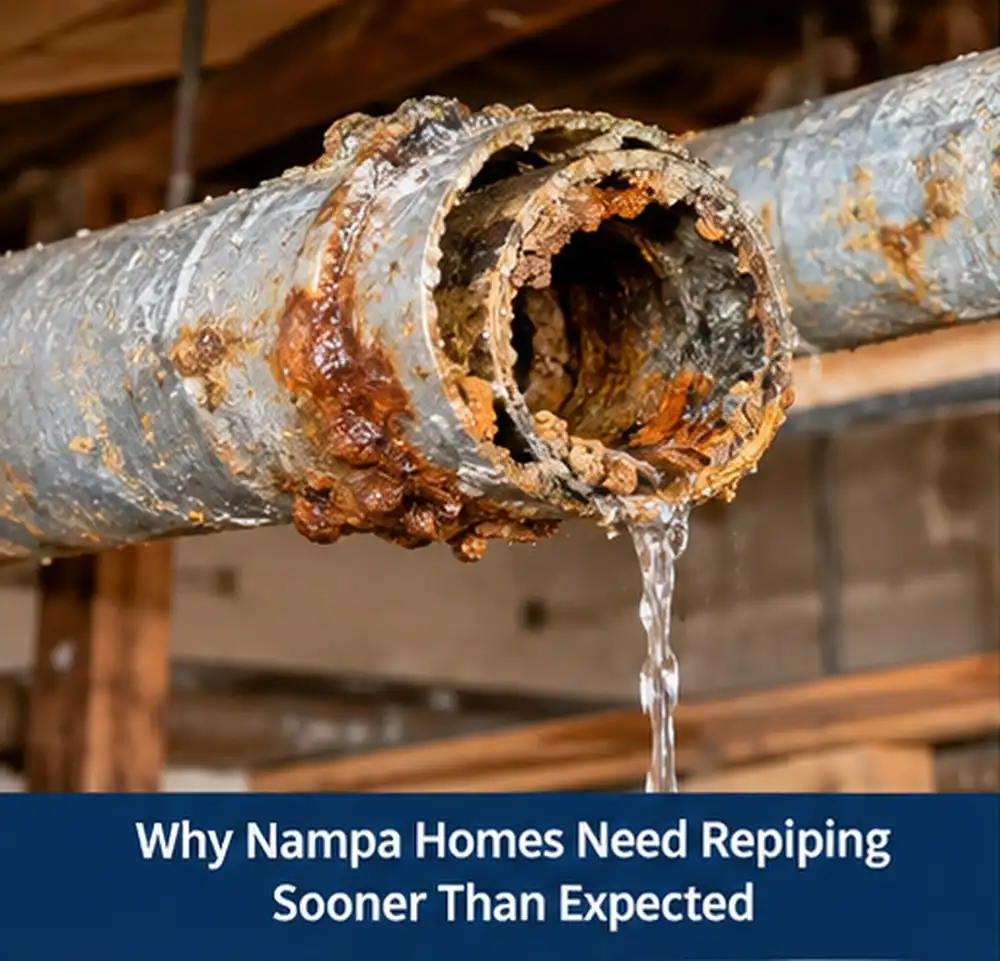
Nampa’s water, weather, and housing stock all wear on pipes. Hard water, freeze-thaw cycles, and aging materials work together. On recent service calls in Nampa and Caldwell, our plumbers keep finding the same pattern: pipes that look fine outside but are nearly closed off inside.
Hard Water Builds Scale Inside Your Lines
Treasure Valley groundwater carries high levels of calcium and magnesium. Over years, those minerals form scale buildup inside pipes. In galvanized steel, scale bonds with rust and shrinks the pipe’s opening. We’ve cut out 1-inch galvanized lines with less than a pencil-width of open space left.
Idaho Winters Stress Every Joint
If you’ve spent a winter in Idaho, protecting your pipes makes complete sense. January lows often drop into the teens, and cold snaps can push below zero. Each freeze-thaw cycle expands and contracts pipe joints. Older rigid pipes crack first, especially in crawl spaces, garages, and exterior walls.
Older Housing Stock Across Canyon County
Nampa has many homes built before 1980, especially near downtown, Lakeview Park, and the Holly Street corridor. Many still run on original galvanized supply lines. Homes built between 1978 and 1995 may have polybutylene, a gray plastic pipe known for sudden, unpredictable failures.
| Home Era (Nampa / Treasure Valley) | Common Supply Pipe | Typical Condition Today | Repipe Priority |
|---|---|---|---|
| Before 1960 | Galvanized steel | Heavy corrosion, low flow | High |
| 1960 to 1977 | Galvanized or early copper | Corrosion, pinhole leaks | High to Moderate |
| 1978 to 1995 | Polybutylene or copper | Fitting failures, brittle plastic | High (polybutylene) |
| 1996 to 2010 | Copper or CPVC | Pinholes from hard water, brittle CPVC | Moderate |
| 2010 to present | PEX | Generally good condition | Low |
Warning Signs Your Home Needs a Repipe
Most pipe failures give early warnings. Catching them early protects your drywall, flooring, and foundation. Our crews recommend checking for these signs at least twice a year.
Quick troubleshooting checklist:
- Check water color. Run cold water first thing in the morning. Brown or orange water often means rusting galvanized pipe.
- Test pressure at multiple fixtures. Weak flow at every tap points to pipe restriction, not a single clogged aerator.
- Look for green or white crust on exposed copper joints. That’s corrosion or mineral seepage.
- Watch your water bill. A jump of 15% or more with no change in habits suggests a hidden leak.
- Listen to your walls. Banging, hissing, or dripping sounds after fixtures shut off signal trouble.
- Inspect crawl spaces for damp insulation, mold, or standing water.
If you can’t find the source, our leak detection services use acoustic tools and thermal imaging to locate leaks without tearing open walls.
| Symptom | Likely Cause | Urgency | Next Step |
|---|---|---|---|
| Rusty or brown water | Corroding galvanized steel | High | Pipe inspection |
| Low pressure everywhere | Scale buildup narrowing pipes | Moderate to High | Pressure test + camera |
| Repeated pinhole leaks | Copper corrosion from hard water | High | Repipe evaluation |
| Metallic taste or odor | Pipe deterioration | Moderate | Water quality test |
| Gray plastic pipe visible | Polybutylene | High | Plan full repipe |
| Rising water bill | Hidden slab or wall leak | High | Leak detection |
| Water stains on ceilings | Active leak above | Urgent | Shut off water, call |
Comparing Pipe Materials for Idaho’s Hard Water
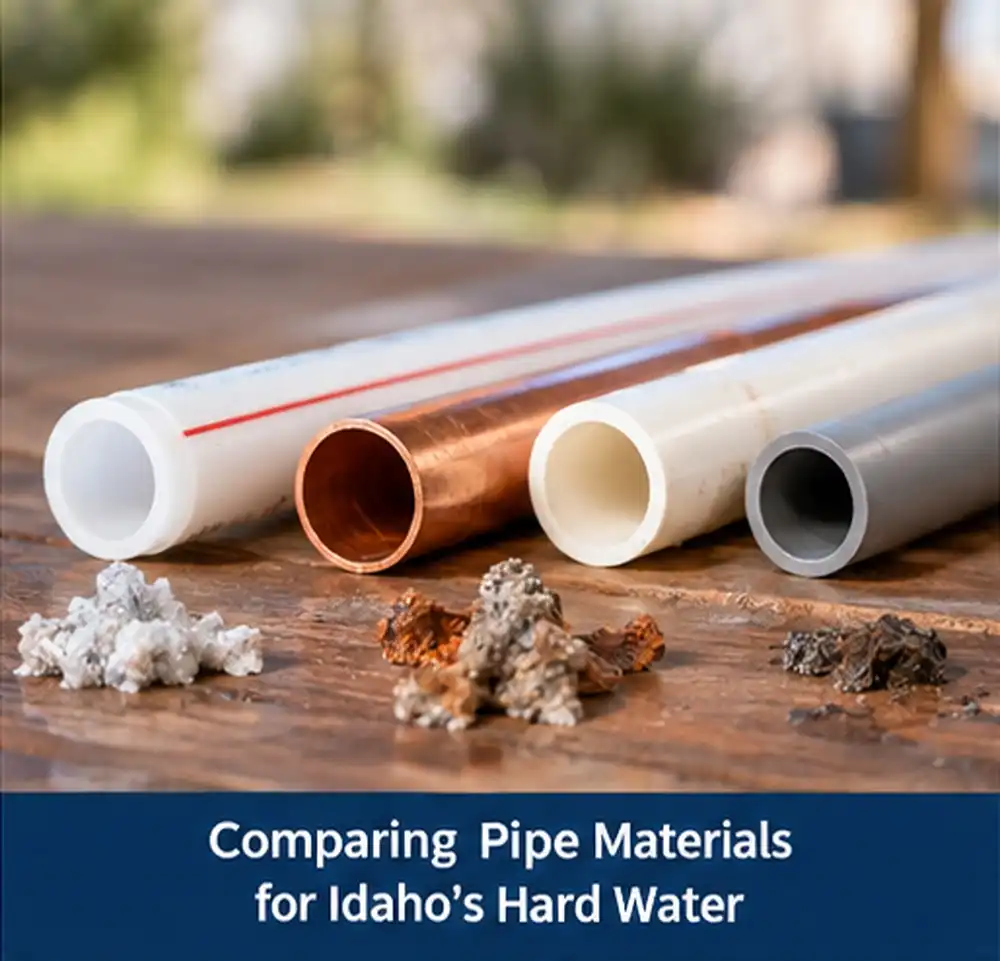
Choosing the right material is the biggest decision in any repipe. When homeowners ask us about repiping Nampa ID properties, PEX is what we recommend most often. Still, copper and CPVC have their place.
Pipe Material Lifespan Comparison
| Material | Expected Lifespan | Hard Water Resistance | Freeze Tolerance | Relative Cost |
|---|---|---|---|---|
| PEX-A | 40 to 50+ years | Excellent (no scale bonding) | Excellent (expands) | $ |
| PEX-B | 40 to 50 years | Excellent | Very good | $ |
| Copper Type L | 50 to 70+ years | Fair (pinholes possible) | Poor (bursts) | $$$ |
| Copper Type M | 40 to 50 years | Fair to poor | Poor | $$ |
| CPVC | 30 to 50 years | Good | Poor (gets brittle) | $ to $$ |
| Galvanized Steel | 40 to 60 years (less with hard water) | Poor | Poor | No longer installed |
| Polybutylene | 10 to 20 years | Poor | Fair | Discontinued in 1995 |
PEX: Our Go-To Choice for Most Nampa Homes
PEX (cross-linked polyethylene) is flexible, affordable, and fast to install. It snakes through walls with fewer openings, which saves on drywall repair.
Pros:
- Resists scale and won’t corrode
- Expands when water freezes, lowering burst risk
- Needs fewer fittings, so fewer leak points
- Quieter than copper; reduces water hammer
- Lowest total project cost
Cons:
- Can’t be exposed to direct sunlight (UV damage)
- Can’t connect directly to a water heater; needs a short metal transition
- Some homeowners prefer the look of copper in exposed areas
Copper: Durable but Vulnerable to Hard Water
Copper has a long track record. But in the Treasure Valley, aggressive water chemistry can cause pinhole leaks within 15 to 25 years. We still install Type L copper when clients want maximum longevity or for exposed runs.
Pros:
- Long lifespan in balanced water
- Fire resistant and UV stable
- Adds resale appeal for some buyers
Cons:
- Higher material cost (often 2x PEX or more)
- Bursts when frozen
- Pinhole risk with hard or acidic water
- More wall openings during install
CPVC: A Budget Option With Trade-Offs
CPVC costs less than copper and resists corrosion. However, it becomes brittle with age and in cold temperatures. Our crews regularly replace cracked CPVC after Idaho cold snaps. We rarely recommend it for new repipes here.
What Repiping Costs in Nampa, ID
Pricing depends on home size, number of fixtures, pipe material, and access. The table below reflects typical Treasure Valley ranges. Your quote may vary after an in-home inspection.
Whole-House Repipe Cost Comparison
| Home Size | Bathrooms | PEX Repipe | Copper Repipe | Typical Timeline |
|---|---|---|---|---|
| Under 1,200 sq ft | 1 | $4,000 to $6,500 | $8,000 to $12,000 | 1 to 2 days |
| 1,200 to 2,000 sq ft | 2 | $5,500 to $8,500 | $10,000 to $16,000 | 2 to 3 days |
| 2,000 to 3,000 sq ft | 2 to 3 | $7,500 to $11,000 | $14,000 to $20,000 | 3 to 4 days |
| 3,000+ sq ft | 3+ | $10,000 to $15,000+ | $18,000 to $28,000+ | 4 to 6 days |
Factors That Raise or Lower Your Price
- Number of fixtures: Each sink, toilet, tub, and appliance adds connection points.
- Home layout: Single-story homes with a crawl space cost less than two-story or slab-on-grade homes.
- Wall access: Finished basements and tile walls add time.
- Drywall patching: Some contractors include it; others charge $500 to $2,500 extra.
- Permit fees: A plumbing permit and inspection are required for a whole-house repipe.
- Main water line: Replacing the line from the street adds $1,500 to $5,000.
- Water heater connections: Old, corroded connections may need upgrades too.
At Meridian Plumbing Services, we give written, line-item quotes before work starts. No surprise add-ons on the final invoice.
Partial Repipe vs. Whole-House Repipe
| Option | Typical Cost | Best For | Downside |
|---|---|---|---|
| Single section repair | $200 to $1,000 | One isolated leak | Doesn’t fix aging system |
| Partial repipe (one zone) | $1,500 to $4,500 | Kitchen or bath remodel | Mixed materials remain |
| Whole-house repipe | $4,000 to $15,000+ | Galvanized, polybutylene, repeat leaks | Higher upfront cost |
Repair vs. Replace: Making the Right Call
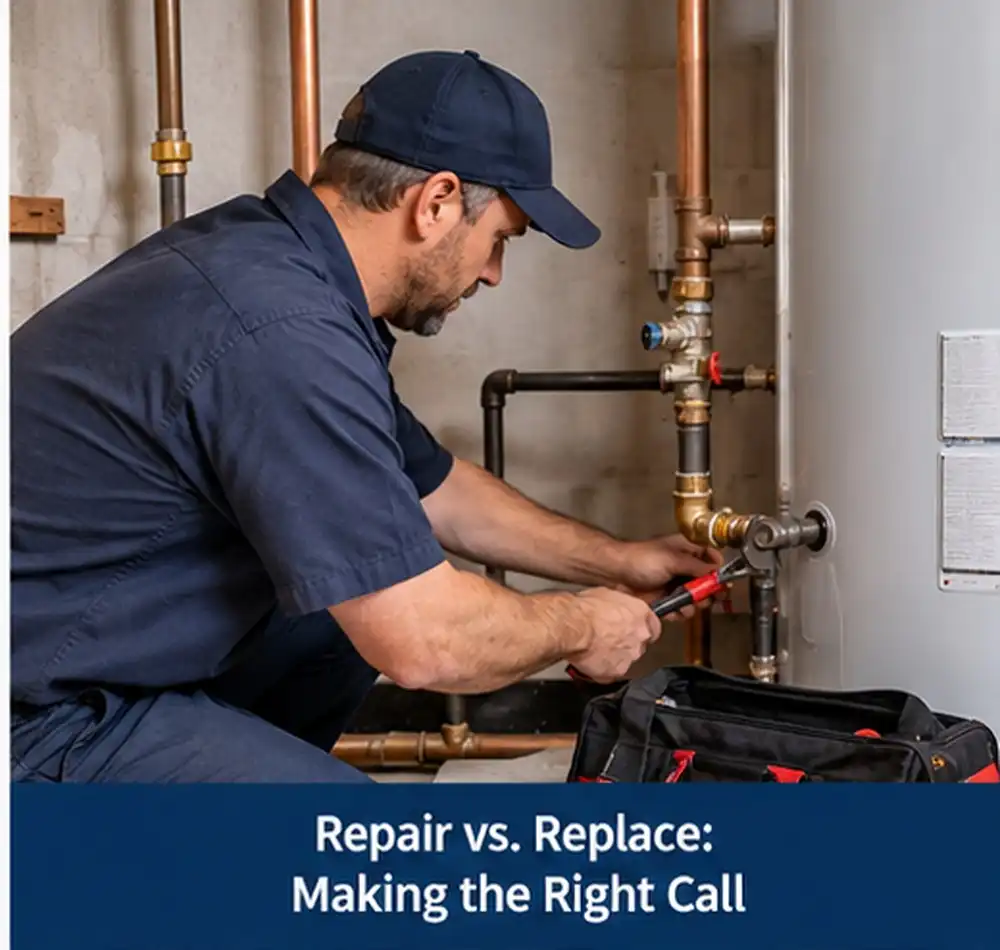
Not every leak means a full repipe. We’ll always tell you when a simple repair is the smarter move. Here’s the framework our plumbers use on every repiping Nampa ID evaluation.
| Factor | Repair Makes Sense | Repipe Makes Sense |
|---|---|---|
| Pipe age | Under 20 years | Over 40 years (galvanized) or any polybutylene |
| Leak frequency | First leak in years | 2+ leaks in 12 months |
| Leak location | One accessible spot | Multiple areas or inside slab |
| Water quality | Clear, no taste issues | Rust, sediment, metallic taste |
| Water pressure | Normal at most fixtures | Low throughout the home |
| Remodel plans | No plans | Kitchen or bath remodel coming |
| Selling the home | Pipes pass inspection | Inspector flagged pipes |
| Insurance | Coverage unaffected | Insurer won’t cover polybutylene |
The Hidden Math of Repeated Repairs
A single leak repair averages $300 to $800. Add drywall repair, flooring damage, and mold remediation, and one leak can top $3,000. Three leaks in two years often equal half the cost of a full repipe. That’s why we walk every homeowner through the long-term numbers, not just the repair ticket.
How Repiping Improves Water Efficiency
New pipes do more than stop leaks. They also cut water waste, improve fixture performance, and help water heaters run better. According to EPA WaterSense, household leaks can waste nearly 10,000 gallons per year in the average home.
| Issue | Typical Water Waste | Impact After Repipe |
|---|---|---|
| Dripping faucet (1 drip/second) | About 3,000 gallons/year | Eliminated with new valves |
| Hidden pinhole leak | 50 to 200+ gallons/week | Eliminated |
| Slab leak | Hundreds of gallons/day | Eliminated with reroute |
| Low-pressure fixtures | Longer run times to fill or rinse | Faster flow, less waiting |
| Long hot water wait | Gallons per shower down the drain | Shorter runs with smart routing |
Better Pipes, Better Water Heater Performance
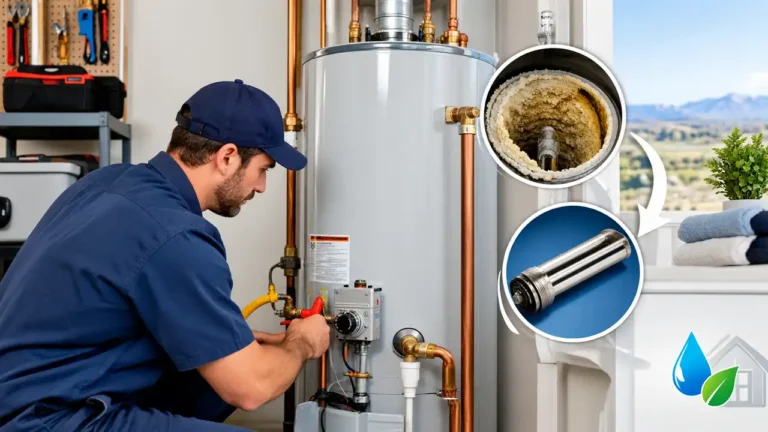
Scale-clogged pipes force your water heater to work harder. Corroded lines also send sediment into the tank. If your heater is struggling after years of hard water, pairing a repipe with water heater repair often restores full hot water output. Many clients notice the difference in their very first shower.
Lead Concerns in Older Homes
Homes built before 1986 may have lead solder on copper joints or lead service lines. The EPA’s lead in drinking water guidance explains the health risks clearly. A repipe with lead-free materials removes that concern for good.
The Repiping Process, Step by Step
Many homeowners worry a repipe means weeks without water. It doesn’t. Our crews work in phases, and you’ll have running water each evening on most projects.
- In-home inspection: We check pipe material, water pressure, fixture count, and access points.
- Written quote: You get a fixed price with material options side by side.
- Permit filing: We pull the required plumbing permit for your address.
- Home protection: Crews lay floor coverings and seal off work areas with plastic sheeting.
- Small access openings: We cut neat, minimal openings in drywall where needed.
- New pipe installation: We run new supply lines, usually from the main shutoff out to each fixture.
- Fixture connections: Every sink, toilet, shower, and appliance gets new shutoff valves.
- Pressure testing: We test the entire system for leaks before closing walls.
- City inspection: A local inspector verifies code compliance.
- Drywall patching and cleanup: Openings are patched and the work area is cleaned.
Typical Repipe Timeline
| Phase | Duration | Water Service |
|---|---|---|
| Inspection and quote | 1 visit (1 to 2 hours) | Normal |
| Permit approval | 1 to 5 business days | Normal |
| Pipe installation | 1 to 4 days | Off during work hours, on at night |
| Inspection | Same day to 2 days | Normal |
| Drywall patch and finish | 1 to 3 days | Normal |
Common Repiping Mistakes to Avoid
We’ve fixed plenty of rushed repipes done by other crews. These are the mistakes we see most often in Nampa homes.
- Skipping the permit. Unpermitted work can cause problems at resale and with insurance claims.
- Mixing materials poorly. Connecting copper to galvanized without a dielectric union speeds up corrosion.
- Ignoring crawl space insulation. New pipes still need insulation against Idaho freezes.
- Leaving old shutoff valves. Old gate valves fail. Replace them during the repipe.
- Choosing on price alone. Ultra-low bids often skip drywall repair, permits, or pressure testing.
- Forgetting the water heater. Corroded heater connections can leak right after a new repipe.
- Not addressing hard water. Without a water softener, new fixtures and heaters still take a beating.
Real Examples From Treasure Valley Service Calls
Real cases show how these decisions play out. Here are two typical projects our crews handle.

Case 1: 1950s Bungalow Near Downtown Nampa
The homeowner called about brown water and a trickling shower. Our camera inspection found galvanized pipes nearly sealed with rust and scale. We completed a PEX repipe in two days for a 1-bath, 1,100 sq ft home. Water pressure jumped from about 25 PSI at the shower to over 55 PSI.
Case 2: 1990s Two-Story in South Nampa
This family had paid for three leak repairs in 14 months. The culprit was polybutylene with brittle fittings. Their homeowner’s insurance also flagged the pipe type at renewal. A whole-house PEX repipe solved both problems. Their insurer removed the warning at the next review.
Post-Repipe Maintenance Checklist
New pipes last longest with a little care. Use this seasonal checklist to protect your investment.
Fall (before first freeze):
- Insulate pipes in crawl spaces, garages, and exterior walls
- Disconnect garden hoses and drain outdoor spigots
- Shut off and drain sprinkler lines
- Check crawl space vents and close them for winter
Winter:
- Keep the thermostat at 55°F or higher, even when traveling
- Open cabinet doors on exterior walls during cold snaps
- Let faucets drip slightly when temps fall below 10°F
Spring and Summer:
- Check water pressure with a gauge (aim for 40 to 80 PSI)
- Inspect the pressure reducing valve if pressure exceeds 80 PSI
- Flush the water heater to clear sediment
- Test the water softener salt level and settings
Yearly:
- Schedule a professional plumbing inspection
- Watch your water bill for unexplained spikes
How to Choose a Repiping Contractor in Nampa
The right contractor matters as much as the right pipe.

When comparing companies for repiping Nampa ID homes, ask these questions.
| Question to Ask | What a Good Answer Looks Like |
|---|---|
| Are you licensed and insured in Idaho? | Yes, with license number provided |
| Do you pull permits? | Always, included in the quote |
| Is drywall repair included? | Clearly stated in writing |
| What warranty do you offer? | Labor warranty plus manufacturer material warranty |
| How long will water be off each day? | Daytime only, restored nightly |
| Do you provide a written, itemized quote? | Yes, before any work begins |
| Can I see reviews or references? | Recent local reviews available |
Red flags include cash-only pricing, vague estimates, and pressure to sign the same day.
FAQs
How long does repiping a Nampa, ID home take?
Most single-family homes take 2 to 4 days for pipe work. Drywall patching may add 1 to 3 days.
Will I have water during the repipe?
Yes, on most jobs. We shut water off during work hours and restore it each evening.
Is PEX safe for drinking water?
Yes. PEX used for potable water is certified for drinking water safety and approved under plumbing codes.
Does homeowner’s insurance cover repiping?
Usually not. Insurance often covers sudden water damage, but not pipe replacement from age or wear. Some insurers require replacing polybutylene.
Does repiping increase home value?
It can. New pipes remove a major inspection red flag and make homes easier to sell.
Can you repipe a slab-on-grade home?
Yes. We usually reroute lines through the attic or walls instead of breaking up the slab.
Should I install a water softener after repiping?
We recommend it for most Treasure Valley homes. A softener protects fixtures, appliances, and your water heater from hard water scale.
Do I need to move out during repiping?
No. Most families stay home throughout the project.
Protect Your Home Before the Next Leak
Old pipes don’t fix themselves, and Idaho’s hard water and freezing winters only speed up the damage. Repiping Nampa ID homes with PEX or copper stops repeat leaks, restores water pressure, and delivers cleaner water. The smartest move is acting before a burst pipe makes the decision for you.
Start with an inspection. Know your pipe material, your pressure readings, and your real options. And if a pipe bursts tonight, our emergency plumber team is available 7 days a week across Nampa, Meridian, Boise, and the entire Treasure Valley. Call Meridian Plumbing Services for honest answers, transparent pricing, and a repipe built to last.