
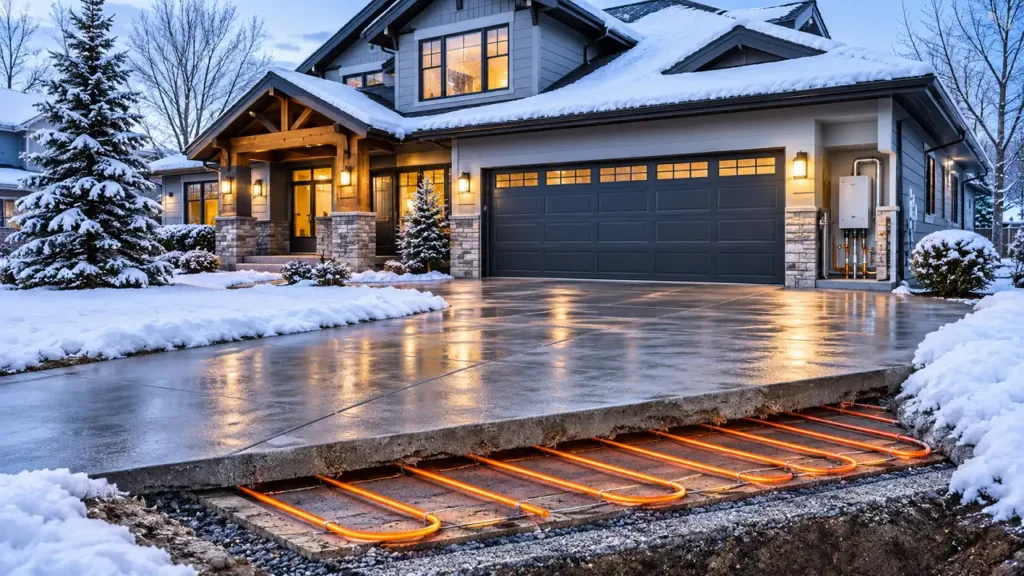
It’s 6 a.m. in January. Your driveway is a sheet of black ice, the shovel is frozen to the garage wall, and you still have to get the kids to school. A heated driveway Meridian ID system ends that routine by melting snow and ice from below the surface. The real question is not whether heated driveways work. It’s which system fits your home, your budget, and your plumbing.
Pick the wrong one and you face high power bills, cold spots, or a leaking hydronic loop buried under concrete. Below, we break down costs, systems, permits, and upkeep so you can plan with confidence.
Key Takeaways
- Hydronic systems cost more to install but less to run. Electric systems cost less upfront and fit smaller zones like walkways and tire tracks.
- Install between May and September. Snow-melt tubing and cables go in with a new pour or paver install, so plan before the October freeze window.
- Hydronic loops are plumbing systems. They need a boiler or high-output heater, glycol protection, and a licensed pro to prevent frozen or cracked tubing.
What Is a Heated Driveway?
A heated driveway is a snow-melt system built into the driveway surface. It uses embedded tubing or electric cables to warm the slab just enough to melt snow on contact. A snow sensor (a small ground or roof device that detects moisture and temperature) turns the system on automatically.
There are two main types. Hydronic systems pump a heated propylene glycol mix (a non-toxic antifreeze) through PEX or PE-RT tubing. Electric systems run heating cables or mats wired to a dedicated breaker. Both melt snow well, but they behave very differently on your utility bills.
Check Also: How Heating and Cooling Eagle ID Systems Affect Your Home’s Plumbing and Energy Bills
Hydronic vs. Electric at a Glance
| Feature | Hydronic Snow Melt | Electric Snow Melt |
|---|---|---|
| Heat source | Gas boiler or high-output water heater | Electric cables or mats |
| Fluid | Glycol and water mix in a closed loop | None |
| Upfront cost | Higher (boiler, manifold, pumps) | Lower |
| Operating cost | Lower with natural gas | Higher per hour of use |
| Best size | Large driveways, 600+ sq ft | Walkways, tire tracks, small pads |
| Warm-up time | Slower, 2 to 4 hours from cold | Faster, often 1 to 2 hours |
| Main trade involved | Plumber / hydronics pro | Licensed electrician |
| Typical lifespan | Tubing: 30+ years; boiler: 15 to 20 years | Cables: 20+ years when installed right |
Some smaller hydronic setups can run off a high-efficiency combi unit or commercial-grade water heater instead of a standalone boiler. If you’re replacing an aging tank anyway, our water heater installation team can size a unit that handles both domestic hot water and a small snow-melt zone. For a full heated driveway Meridian ID project over 600 square feet, a dedicated boiler is the smarter call.
Next step: Measure your driveway’s square footage before you request any quotes.
Why Meridian Winters Demand a Snow-Melt Plan
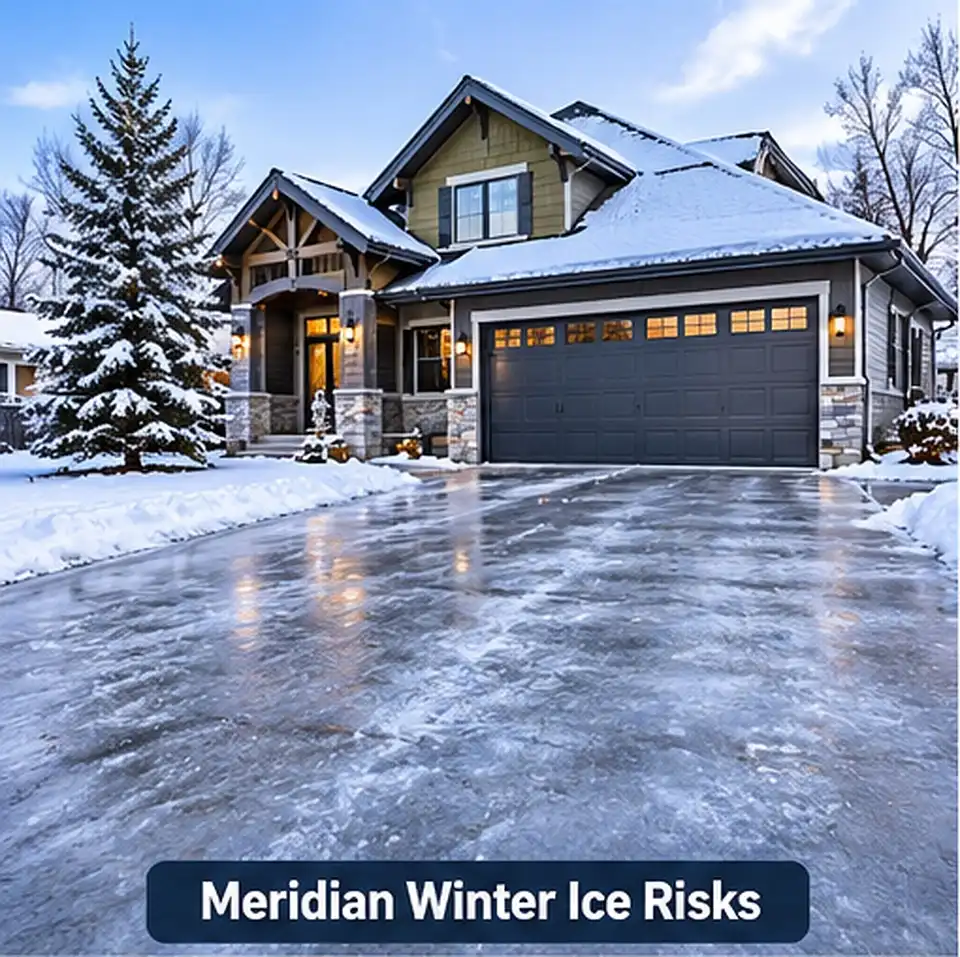
Meridian winters are not extreme, but they are tough on concrete. The real enemy is the freeze-thaw cycle, where water seeps into the surface by day and expands as ice overnight. That cycle causes spalling (flaking surface concrete), cracks, and slick morning ice.
According to Warmzone’s Idaho radiant heating climate data, the Southern Idaho and Snake River Plain region sees winter lows of 10 to 25°F and 10 to 50 inches of snowfall per year. The same data flags freeze-thaw cycles, temperature inversions, and snow drifts as the region’s main winter challenges. That’s exactly the pattern that turns a sloped Meridian driveway into a hazard.
Treasure Valley Winter Conditions
| Factor | Treasure Valley Range | What It Means for Your Driveway |
|---|---|---|
| Winter lows | 10 to 25°F | Ice forms overnight, even after sunny days |
| Annual snowfall | 10 to 50 inches | Several plowable storms per season |
| Freeze window | October through April | Seven months of possible ice |
| Freeze-thaw cycles | Frequent | Cracks, spalling, heaved pavers |
| Inversions | Common in valley lows | Cold, foggy days where ice lingers |
If you’ve spent a winter in Idaho, you know the worst ice isn’t during the storm. It’s the refreeze the next morning. A heated driveway Meridian ID homeowners install keeps the surface above freezing, so meltwater drains away instead of turning into ice.
Next step: Note which parts of your driveway stay icy longest, usually shaded north-facing sections near the garage.
Check Also: Emergency Plumber Meridian: How to Stop Water Damage Fast and What It Means for Your Home
Heated Driveway Meridian ID Cost Breakdown
Heated driveway Meridian ID cost depends on size, system type, and surface. The heating hardware and the paving are separate line items. A hydronic system adds a boiler, tubing, insulation, and controls. Electric mats are priced by area and heat output.
The ranges below reflect typical Treasure Valley market pricing. They are not a quote for your address.
Installation Cost by Project Size
| Project Type | Typical Size | Electric Installed | Hydronic Installed |
|---|---|---|---|
| Front walkway or steps | 50 to 100 sq ft | $2,000 to $4,000 | Rarely cost-effective alone |
| Tire tracks only | 150 to 250 sq ft | $3,000 to $6,000 | $6,000 to $10,000 |
| Single-car driveway | 300 to 400 sq ft | $4,500 to $9,000 | $9,000 to $15,000 |
| Two-car driveway | 500 to 700 sq ft | $7,500 to $16,000 | $12,000 to $25,000 |
| Large or three-car driveway | 800+ sq ft | $12,000 to $22,000+ | $18,000 to $35,000+ |
Cost Per Square Foot and Add-Ons
| Line Item | Typical Range | Notes |
|---|---|---|
| Electric cables or mats | $12 to $25 per sq ft | Heating system only |
| Hydronic tubing and install | $15 to $30 per sq ft | Plus boiler and manifold |
| Snow-melt boiler | $4,000 to $10,000 | Sized to driveway BTU load |
| Snow sensor and controller | $500 to $1,500 | Automatic activation |
| New concrete driveway | $8 to $15 per sq ft | Separate from heating |
| Paver driveway | $22 to $40 per sq ft | Easier to repair later |
| Permit fees | $100 to $500 | Varies by scope and jurisdiction |
| Annual service visit | $150 to $400 | Glycol, pumps, sensors, breakers |
Estimated Operating Cost Per Storm
Hydronic systems win on running costs. Natural gas delivers heat for less than electric resistance in the Treasure Valley.
| System (600 sq ft driveway) | Approx. Energy Use | Approx. Cost Per Hour | 8-Hour Storm Estimate |
|---|---|---|---|
| Electric (about 50 W/sq ft) | 30 kWh per hour | $3.00 to $3.75 | $24 to $30 |
| Hydronic, gas boiler | About 1 therm per hour | $0.90 to $1.30 | $7 to $11 |
| Hydronic, idle mode | Low-level standby | Pennies to $0.50 | Varies with settings |
These are rough estimates based on typical local utility rates. Your real numbers depend on slab insulation, sensor settings, and how often you run idle mode (keeping the slab slightly warm before a storm).
Next step: Ask every contractor for an itemized quote that lists heating, paving, controls, and permits separately.
Check Also: Sewer Line Installation Kuna ID: How to Plan a Code-Ready Line That Lasts for Decades
Free Heated Driveway Meridian ID Consultations: What “Free” Really Means
No one installs a heated driveway for free. When you search for a free heated driveway Meridian ID option, what you’ll find is free estimates, free system designs, and free second opinions.
Those are worth using.

Here’s what’s commonly available at no cost:
- Free on-site estimates from local plumbing and hydronic contractors
- Free system design from some manufacturers, such as Warmzone, which designs layouts and ships components to your installer
- Free matching services that connect you with up to three local installers
- Free second opinions on a quote you already have
Watch for red flags. A “free” offer that skips a site visit, won’t put the scope in writing, or bundles a pricey service plan isn’t free at all. The best free consultation ends with an itemized quote, not a sales pitch.
Questions to Ask During a Free Consultation
- Ask whether they recommend hydronic or electric, and why.
- Request the BTU or watt-per-square-foot design load.
- Confirm what snow sensor and controller are included.
- Check whether permits and inspections are in the price.
- Ask how the warranty covers tubing, cables, and controls separately.
- Request references from Meridian jobs that have run at least one full winter.
Next step: Book two free consultations and compare both quotes on the same written scope.
Check Also: Hardin Valley Water Line Repair: Spot the Signs, Compare Costs, and Protect Your Home
How Hydronic Systems Connect to Your Home Plumbing
A hydronic heated driveway is a plumbing system under your concrete. It needs a heat source, pumps, valves, and a sealed loop, the same parts we work on in boiler rooms across the Treasure Valley.
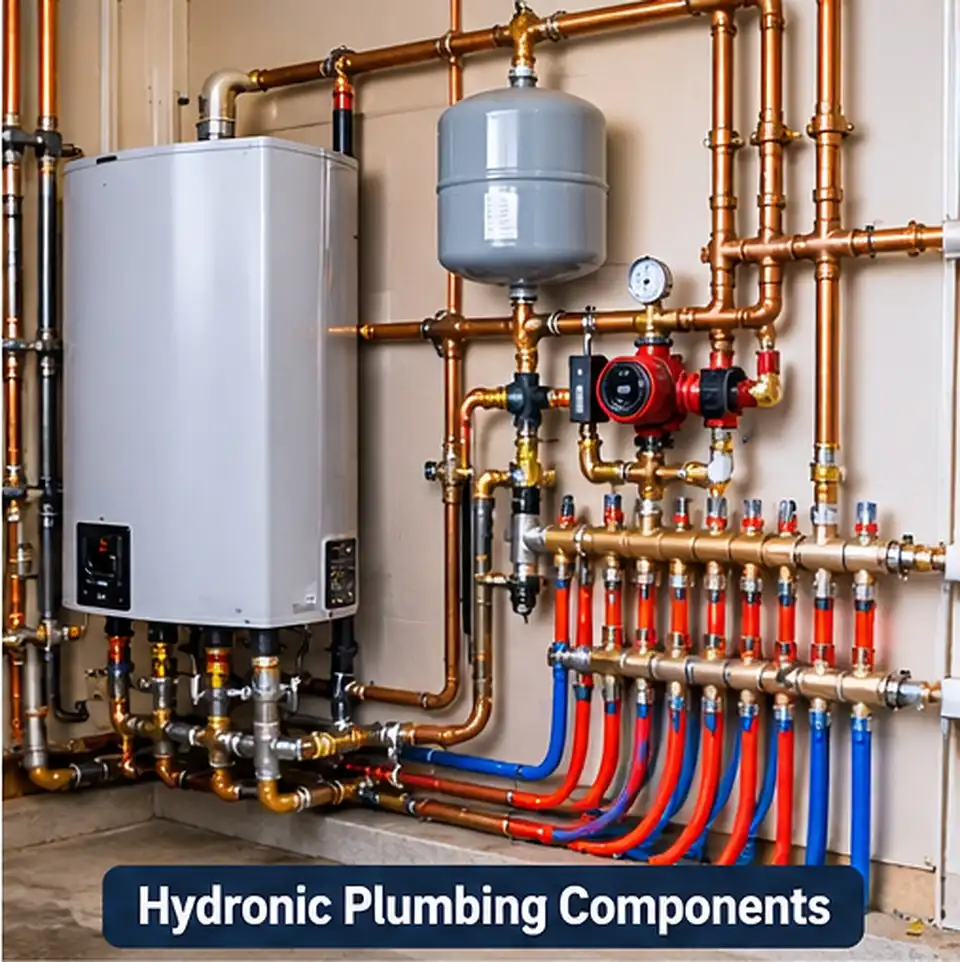
That’s why a licensed plumber belongs on any hydronic heated driveway Meridian ID project.
The Key Components
| Component | What It Does | Why It Matters |
|---|---|---|
| Boiler or water heater | Heats the glycol mix | Undersizing causes cold spots |
| Heat exchanger | Separates glycol from domestic water | Protects your drinking water |
| Manifold | Splits flow into equal tubing loops | Uneven loops melt unevenly |
| Circulator pumps | Move fluid through the loop | Pump failure stops melting |
| Expansion tank | Absorbs fluid expansion as it heats | Prevents pressure spikes |
| Mixing valve | Controls slab temperature | Protects concrete from thermal shock |
| Glycol mix | Antifreeze in the loop | Prevents frozen, cracked tubing |
Why Idaho Hard Water Matters Here
Hard water and hydronic loops don’t mix. Treasure Valley water carries high mineral levels, and scale buildup shortens boiler and water heater life. Our plumbers frequently see this in Nampa homes, where untreated water has left heavy scale inside heat exchangers. We fill snow-melt loops with pre-mixed glycol or treated water, never straight hard tap water.
The EPA’s WaterSense guidance on efficient hot water delivery stresses short, insulated pipe runs and smart system design to cut wasted heat and water. The same logic applies to snow melt. Insulated supply lines from the boiler to the manifold keep heat going into the slab, not into the ground.
Next step: Find out where a boiler could go in your garage or mechanical room before design starts.
Installation Process: Step by Step
Heated driveways go in with a new surface, not on top of an old one. The tubing or cables sit under concrete, asphalt, or pavers.
On recent service calls in Meridian, we’ve seen most projects tied to a driveway replacement or a new-construction upgrade.
- Assess the site. Measure the area, check slope, and plan meltwater drainage.
- Choose the system. Pick hydronic or electric based on size, budget, and fuel source.
- Design the layout. Calculate heat load and space tubing or cables evenly.
- Pull permits. File plumbing, electrical, or building permits before work starts.
- Remove the old surface. Tear out and haul away existing concrete or asphalt.
- Prepare the base. Compact gravel and add rigid foam insulation under the slab.
- Install tubing or cables. Tie them to rebar or mesh at the correct depth.
- Pressure-test the loop. Hydronic loops get an air pressure test before the pour.
- Pour or lay the surface. Keep the loop under pressure during the pour to catch damage.
- Connect the heat source. Set the boiler, manifold, pumps, and controls.
- Install the snow sensor. Place it where snow lands first and drifts least.
- Commission the system. Fill with glycol, purge air, and test every zone.
Don’t Skip Drainage
Melted snow has to go somewhere. Without a plan, meltwater pools at the garage apron or refreezes at the street edge. Many installs add a trench drain (a long, grated channel drain) at the low end of the driveway.
If that drain ties into your yard or storm lines, keep it clear with routine drain cleaning, especially after fall leaves and winter grit build up.
Meridian’s new-construction lots add another wrinkle. Developers often build on compacted fill soil that keeps settling for years, so a deeper, denser base protects your tubing from shifting.
Next step: Walk your driveway during the next heavy rain and mark where water pools.
Pros and Cons of a Heated Driveway
A heated driveway is a lifestyle upgrade with real trade-offs. Weigh both lists before you commit.
Pros
- No shoveling or snowblowing
- Fewer slip-and-fall risks for family and guests
- No rock salt, which protects concrete and landscaping
- Longer driveway life with fewer freeze-thaw cracks
- Automatic operation with a snow sensor
- Added home value and curb appeal
Cons
- High upfront cost, especially for hydronic systems
- Ongoing energy costs during storms
- Hard to repair under poured concrete
- Requires a new surface in most cases
- Needs annual maintenance for hydronic loops
- Permits and multiple trades add planning time
DIY vs. Professional Installation
Heated driveways are not a weekend DIY project. Electric systems need a GFEP breaker (ground-fault equipment protection) and licensed wiring.
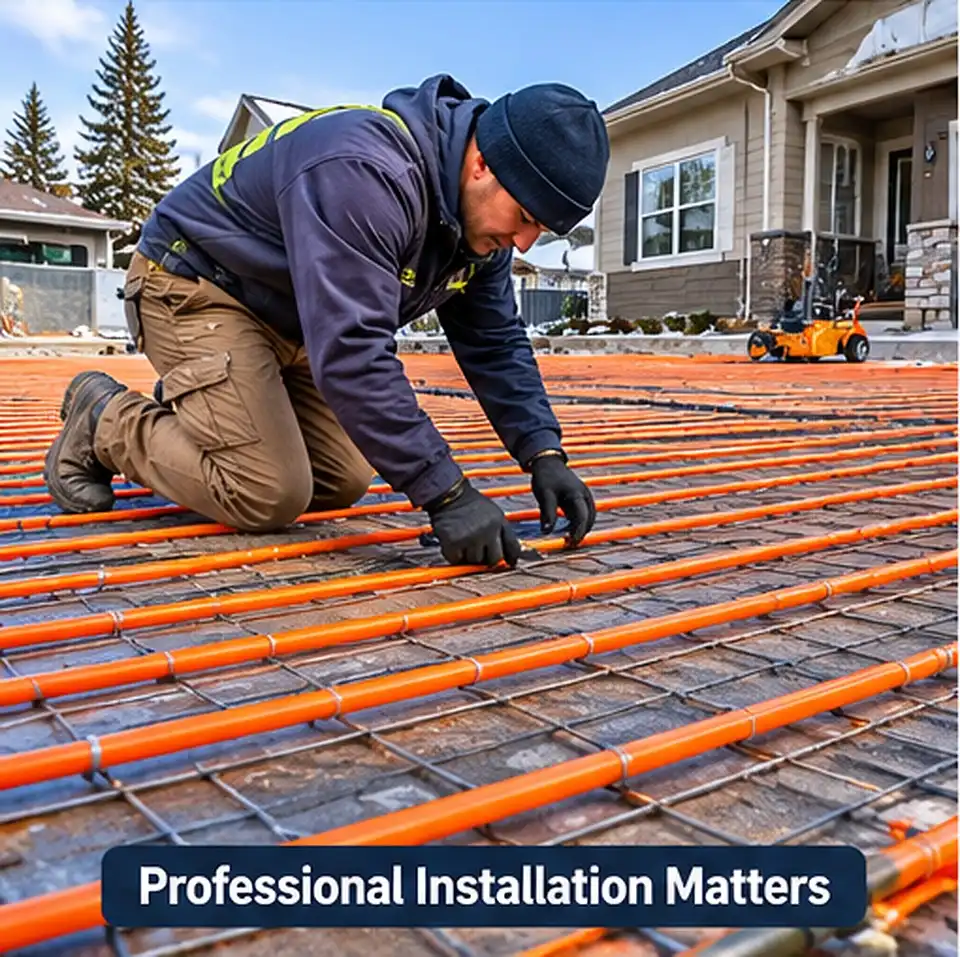
Hydronic systems need pressure testing, boiler venting, and gas line work.
| Factor | DIY Approach | Professional Installation |
|---|---|---|
| Upfront savings | 20% to 40% on labor | Full labor cost |
| Design accuracy | Guesswork on heat load | Engineered layout |
| Permits | Homeowner liability | Handled by contractor |
| Electrical work | Code and safety risk | Licensed electrician |
| Boiler and gas lines | Not recommended | Licensed plumber |
| Pressure testing | Often skipped | Standard step |
| Warranty | Often voided | Manufacturer plus workmanship |
| Repair cost if wrong | Jackhammer and redo | Covered under warranty |
A mistake under concrete is the most expensive mistake in home improvement. One damaged cable or kinked tube can mean tearing out a section of your new driveway.
Permits and Code Requirements
Most heated driveway projects need at least one permit. The scope decides which ones. A new boiler needs mechanical or plumbing permits. New circuits need an electrical permit.
A full driveway replacement may need a building or right-of-way permit.
| Work Type | Permit Typically Needed | Who Usually Pulls It |
|---|---|---|
| New boiler or gas line | Mechanical / plumbing | Licensed plumber |
| Electric snow-melt circuit | Electrical | Licensed electrician |
| Driveway replacement or widening | Building or right-of-way | General or paving contractor |
| Curb cut changes | City right-of-way | Paving contractor |
| HOA approval | Architectural review | Homeowner or contractor |
Typical permit fees run $100 to $500 through the City of Meridian Building Division or the Boise Building Department, depending on your address. A heated driveway Meridian ID project inside an HOA also needs architectural approval before work starts. Many Meridian HOAs meet monthly, so submit early.
Next step: Call your HOA and the city building division to confirm requirements for your address.
Seasonal Performance in the Treasure Valley
Your heated driveway works hardest from December through February.
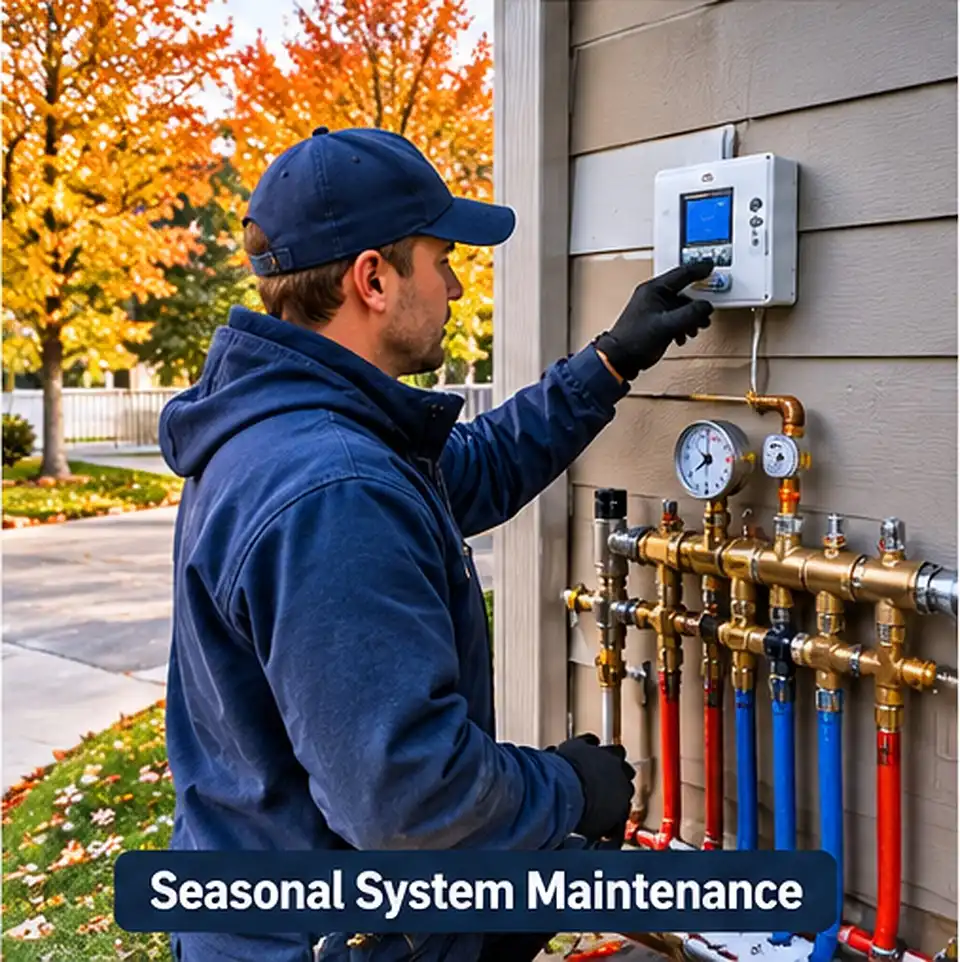
Planning the rest of the year around it keeps the system ready.
| Season | Driveway Conditions | System Activity | What to Do |
|---|---|---|---|
| Spring (Mar to May) | Late frosts, rain | Occasional | Inspect surface, plan repairs |
| Summer (Jun to Aug) | Hot and dry | Off | Best install window |
| Early fall (Sep) | Mild | Off | Pre-season service, test controls |
| Late fall (Oct to Nov) | First freezes | Idle and storm mode | Check sensor and glycol |
| Winter (Dec to Feb) | Snow, ice, inversions | Peak use | Monitor cold spots and pressure |
Annual Maintenance Checklist
A heated driveway needs a yearly tune-up, just like your furnace. Schedule it in September, before the first freeze.
Hydronic Systems
- Test glycol concentration and pH
- Check loop pressure and expansion tank charge
- Inspect circulator pumps for noise or leaks
- Service the boiler: burner, venting, and heat exchanger
- Bleed air from the manifold
Electric Systems
- Test the GFEP breaker for proper tripping
- Measure cable resistance to catch hidden faults
- Check controller and sensor connections
Both Systems
- Clean the snow sensor of dirt and debris
- Clear trench drains and downspout outlets
- Skip rock salt, which can damage the surface and components
- Seal surface cracks before winter
Common Heated Driveway Problems
Most heated driveway failures start small.
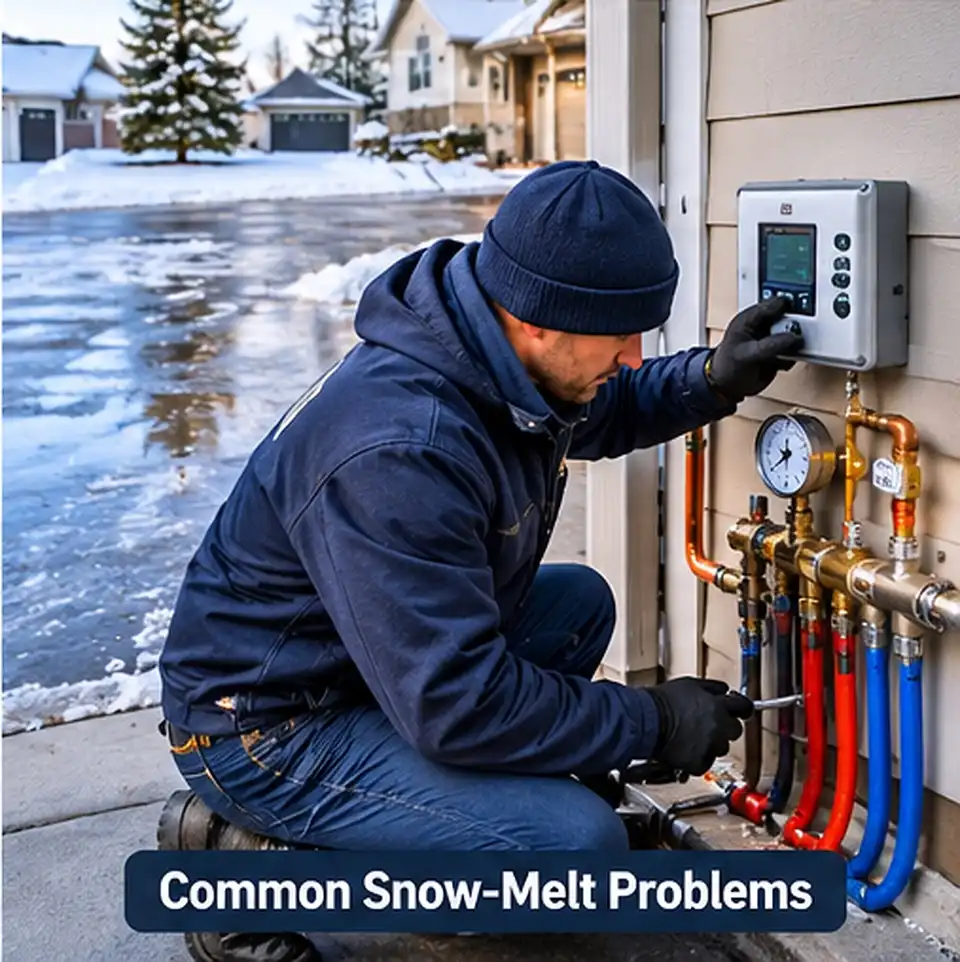
Catch them early and repairs stay simple.
| Problem | Likely Cause | Fix |
|---|---|---|
| Cold spots | Air in loop, uneven spacing, undersized boiler | Purge air, rebalance manifold |
| System won’t turn on | Faulty snow sensor or controller | Clean or replace sensor |
| Slow melting | Low glycol flow or weak pump | Service pump, check pressure |
| Pressure keeps dropping | Leak in the hydronic loop | Leak detection and repair |
| Breaker keeps tripping | Damaged electric cable | Resistance test, locate fault |
| Frozen or cracked tubing | Low glycol or power loss | Emergency repair |
| Refreeze at driveway edge | Poor drainage | Add or clear trench drain |
| High energy bills | No slab insulation, idle mode left on | Adjust settings, check controls |
A pressure drop or frozen loop in January can’t wait. If your hydronic system loses pressure during a cold snap, call an emergency plumber right away. Fast action can save tubing that would otherwise crack and require tearing out concrete.
FAQs
How much does a heated driveway Meridian ID homeowners install typically cost?
A two-car driveway often runs $7,500 to $16,000 electric or $12,000 to $25,000 hydronic. Small walkways start around $2,000 to $4,000.
Can I add a heated driveway to my existing concrete?
Usually not. Most systems go under a new surface. Some electric cables can be saw-cut into existing concrete, but results vary.
Which is better for Meridian, hydronic or electric?
Hydronic fits large driveways with natural gas access. Electric fits smaller zones and lower budgets.
Is a free heated driveway consultation worth it?
Yes. A free estimate gives you a written scope to compare. Get at least two.
How long does installation take?
Most projects take one to three weeks, including surface removal, install, curing, and commissioning.
Do heated driveways work in heavy snow?
Yes, when sized correctly. Turn on idle mode before big storms so the slab is warm when snow starts.
Will a heated driveway raise my home’s value?
It adds curb appeal and buyer interest, especially in Meridian’s newer subdivisions.
The Bottom Line
A heated driveway is a long-term investment in safety and convenience. It ends shoveling, protects your concrete from freeze-thaw damage, and keeps your family off icy surfaces. The right choice depends on your driveway size, fuel source, and budget.
At Meridian Plumbing Services, we give straight answers and transparent quotes. A heated driveway Meridian ID project built on the right design, the right heat source, and a pressure-tested loop will melt snow reliably for decades. Schedule your consultation this spring, and you’ll have the system running before the first October freeze.