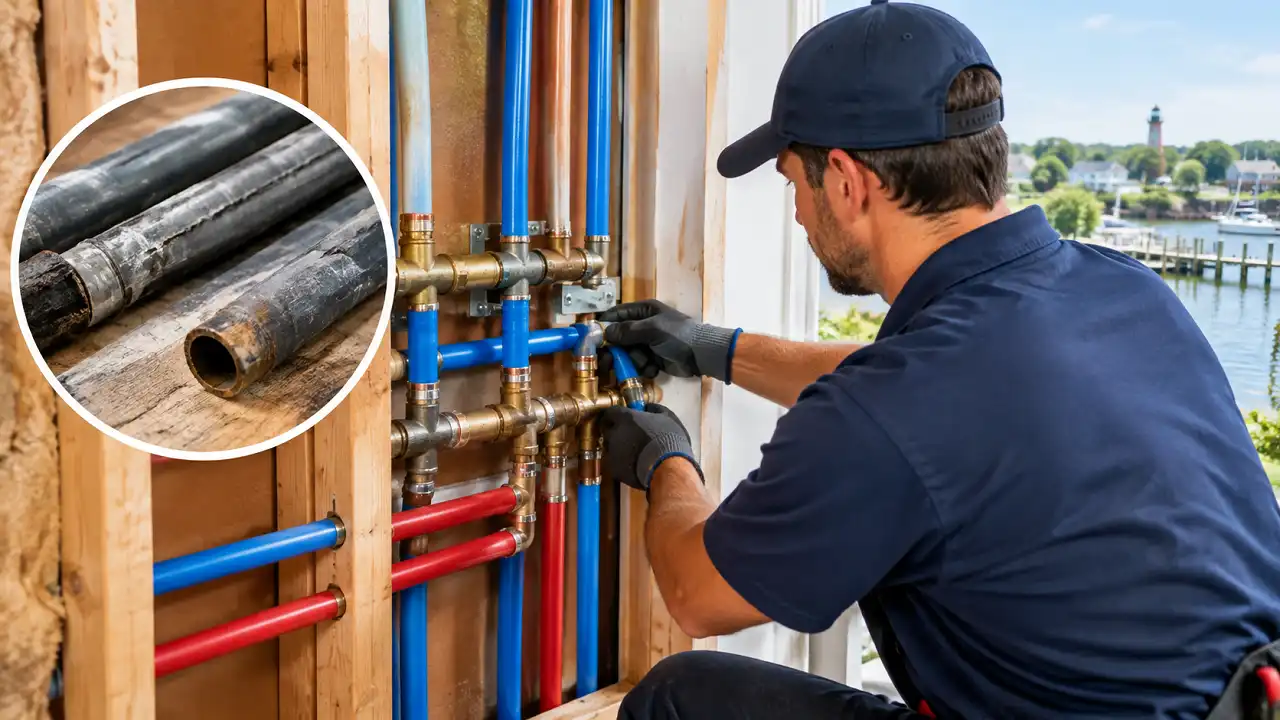
Polybutylene Re-Pipe Severna Park: Costs, Risks & Process
Gray plastic pipe behind your water heater can fail without warning and flood a finished basement overnight. If your home was built between 1978 and 1995, a polybutylene re-pipe Severna Park may be the most important plumbing decision you make this decade. These pipes don’t fail from age alone. They break down from the inside, and insurers and home buyers know it. So what does that mean for you? A planned re-pipe costs far less than an emergency flood cleanup, a denied insurance claim, or a stalled home sale.
Key Takeaways
- Check your pipes now. Polybutylene is usually gray, blue, or black, stamped “PB2110,” and common in homes built from 1978 to 1995.
- Replace, don’t patch. Spot repairs don’t stop internal degradation. A whole-home re-pipe with PEX or copper is the only lasting fix.
- Protect your policy and sale. Many insurers decline or surcharge polybutylene homes, and buyers’ inspectors flag it every time.
What Is Polybutylene Pipe?
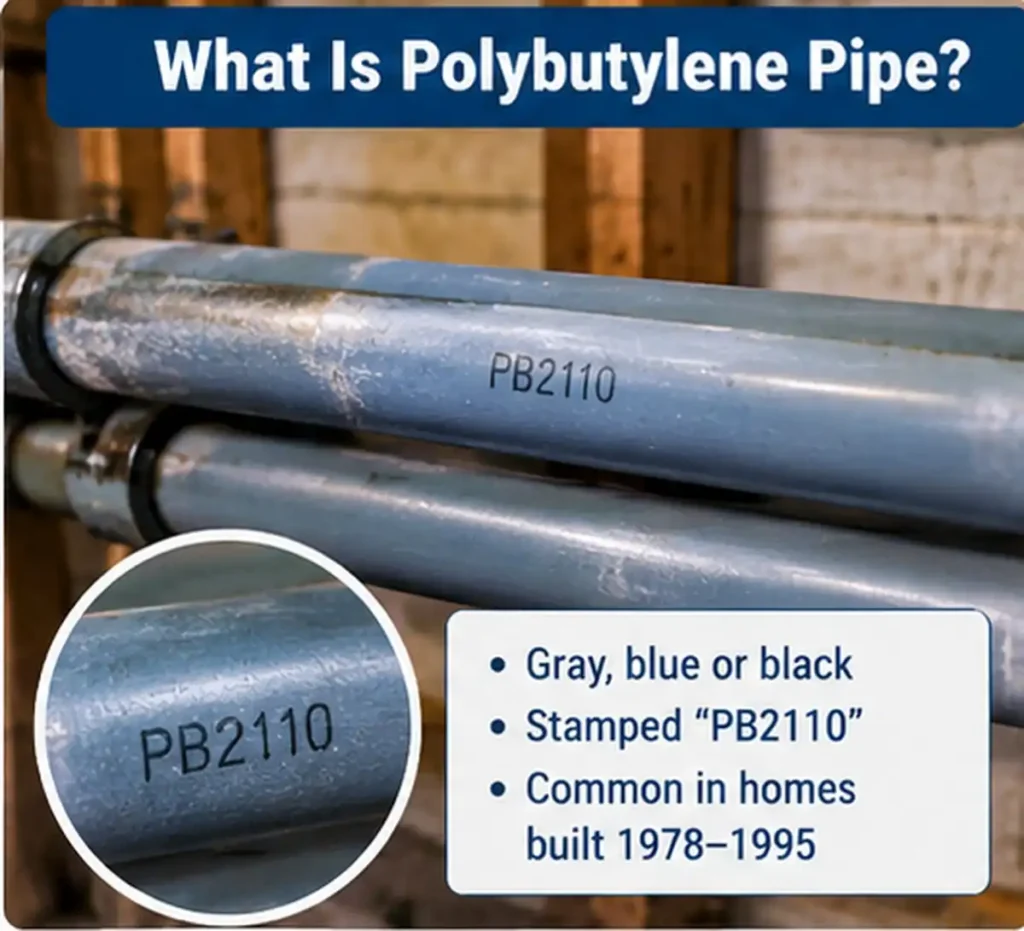
Polybutylene (PB) is a flexible plastic resin used for water supply lines from the late 1970s to the mid-1990s. Builders loved it. It was cheap, easy to install, and resisted freezing better than copper. Then the failures started.
Our plumbers frequently see this pipe in older Boise and Meridian homes, and the story is always the same. The pipe looks fine outside. Inside, chlorine and other oxidants in treated water attack the plastic. It turns brittle, develops micro-fractures, and eventually splits.
The problem got big enough to trigger a class-action lawsuit (Cox v. Shell Oil) in the 1990s, with a settlement near $1 billion. That claims window has closed, so today’s repairs come out of pocket. Polybutylene was dropped from national model plumbing codes in the mid-1990s and is no longer installed.
How to Identify Polybutylene
| Feature | Polybutylene (PB) | PEX | Copper |
|---|---|---|---|
| Color | Gray, blue, black, sometimes white | Red, blue, white | Orange-brown metal |
| Stamp/Marking | “PB2110” or “M” code | “PEX” plus ASTM rating | Type K, L, or M |
| Feel | Stiff, slightly waxy | Flexible, smooth | Rigid metal |
| Common Fittings | Acetal plastic or copper/aluminum crimp rings | Brass or poly fittings, crimp/expansion | Soldered or press joints |
| Install Era | 1978–1995 | 1990s–present | 1960s–present |
Where to look first:
- Near the water heater
- At the main shutoff valve in the basement or crawlspace
- Under kitchen and bathroom sinks
- Behind toilets and washing machine boxes
- Where the main line enters the house (exterior PB is often blue or black)
Can’t tell for sure? Professional leak detection paired with a pipe inspection gives you a clear answer without tearing into walls.
Warning Signs Your Polybutylene Pipes Are Failing
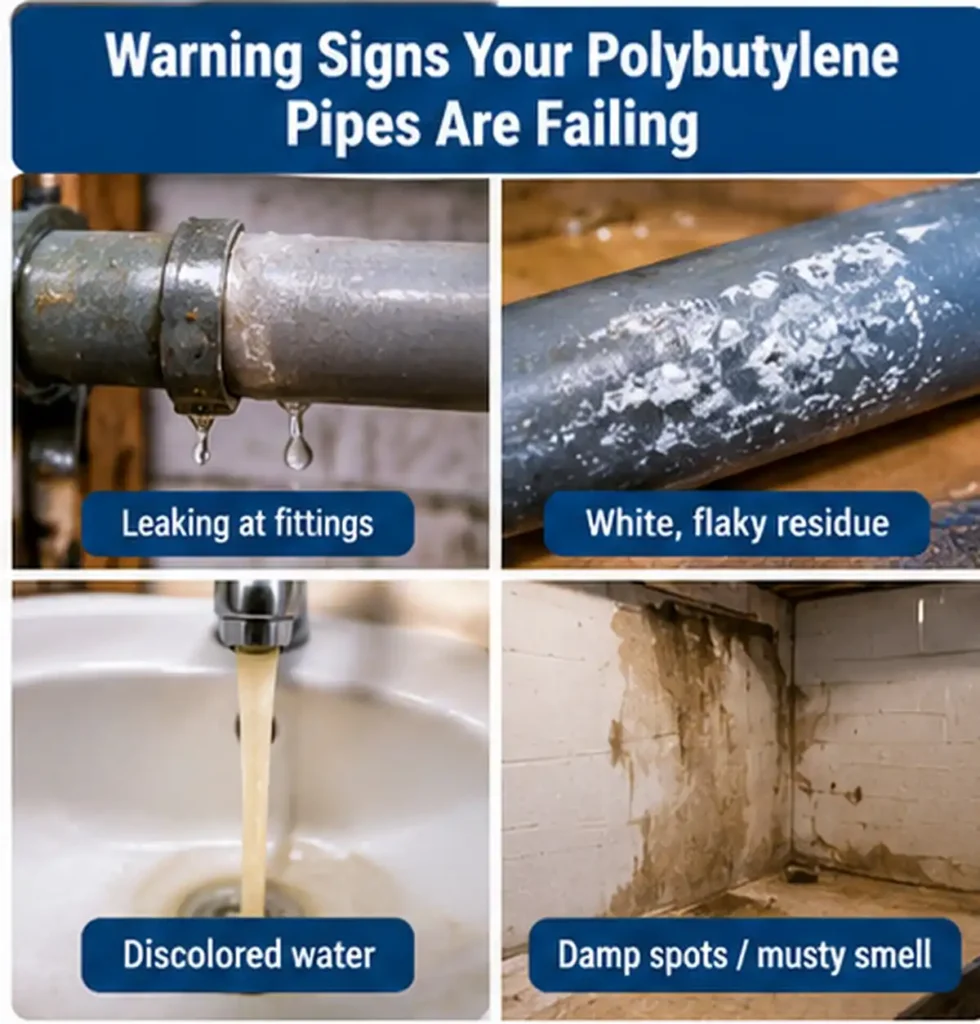
Polybutylene rarely gives a long warning. Still, there are clues. On recent service calls, we’ve traced many surprise leaks back to signs homeowners had noticed for months.
Troubleshooting Checklist
- Watch your water bill. A steady, unexplained increase often means a hidden leak.
- Do the meter test. Turn off every fixture. If the water meter still moves, water is escaping somewhere.
- Inspect fittings. Look for white, flaky residue or discoloration at joints.
- Check for dampness. Stained ceilings, warped floors, or a musty smell point to slow leaks.
- Note pressure changes. Sudden low pressure can signal a split or restriction.
- Look for blisters. Small bubbles or cracks on the pipe surface are serious red flags.
| Warning Sign | What It Usually Means | Urgency |
|---|---|---|
| Pinhole drips at fittings | Fitting or crimp ring failure | 🔴 High |
| Flaking on pipe surface | Chlorine degradation underway | 🔴 High |
| Rising water bill | Hidden leak in wall or slab | 🟠 Medium-High |
| Discolored water | Pipe breakdown or fitting corrosion | 🟠 Medium |
| Low pressure in one area | Partial blockage or leak | 🟡 Medium |
| No visible symptoms | Pipe is still aging internally | 🟡 Plan ahead |
According to EPA WaterSense, the average household’s leaks can waste nearly 10,000 gallons of water each year. With polybutylene, a slow leak can become a burst line fast.
Why Severna Park Homes Are at Risk
Severna Park, Maryland sits in Anne Arundel County, where a large share of homes went up during the 1970s–1990s building boom. That timeline lines up almost perfectly with the polybutylene era. It’s why local inspectors see so much demand for a polybutylene re-pipe Severna Park homeowners can count on.
Several local factors add pressure:
- Home age: Many subdivisions were built between 1978 and 1995.
- Disinfected municipal water: Chlorine-based treatment is the main driver of PB breakdown.
- Finished basements: A burst line below grade causes costly water damage.
- Freeze-thaw cycles: Winter cold stresses brittle pipe and aging fittings.
- Waterfront humidity: Moist air speeds up mold growth after any leak.
If you’ve spent a winter in Idaho, protecting your pipes makes complete sense. We deal with hard water and deep freezes across the Treasure Valley every year. The same logic applies to Maryland’s colder months. Old plastic and cold snaps are a bad mix anywhere.
A quick note from our team: Meridian Plumbing Services serves Meridian, Boise, Nampa, and the Treasure Valley. If you’re planning a polybutylene re-pipe in Severna Park, hire a plumber licensed by the Maryland State Board of Plumbing. The pipe, the risks, and the process are the same, and this article will help you ask the right questions.
The Re-Pipe Process, Step by Step
A whole-home re-pipe sounds disruptive. In reality, most homes are done in 2 to 5 days, and you often keep water service each evening.
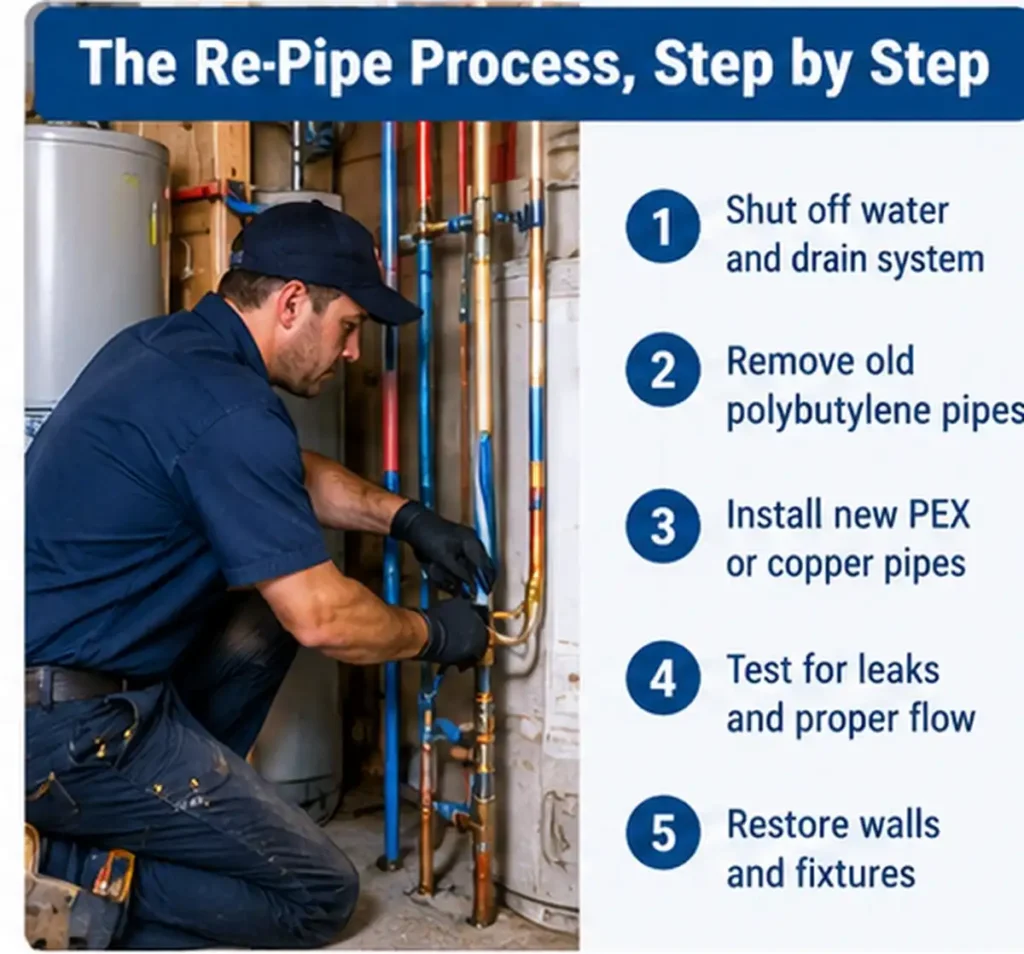
Here’s how our crews handle it.
Our Step-by-Step Re-Pipe Workflow
- Inspection and mapping. We trace every supply line and note fixture counts.
- Written quote. You get a transparent price covering materials, labor, permits, and patching.
- Permit filing. Most jurisdictions require a plumbing permit for a re-pipe.
- Home protection. We cover floors, furniture, and work zones.
- Small access cuts. We open minimal drywall to route new lines.
- New pipe installation. PEX or copper runs from the main to every fixture.
- Pressure testing. We test the full system for leaks before closing walls.
- Inspection sign-off. A local inspector approves the work.
- Drywall patching. Access holes are repaired and ready for paint.
- Old pipe decommissioned. PB lines are cut and capped or removed where accessible.
Typical Timeline
| Home Size | Bathrooms | Typical Duration |
|---|---|---|
| Under 1,500 sq ft | 1–2 | 2–3 days |
| 1,500–2,500 sq ft | 2–3 | 3–4 days |
| 2,500–3,500 sq ft | 3–4 | 4–5 days |
| 3,500+ sq ft | 4+ | 5–7 days |
When you’re ready to schedule, our Pipe Relining follow this exact process with upfront pricing and no surprises.
Cost Comparison: What a Polybutylene Re-Pipe Really Costs
Pricing depends on home size, fixture count, pipe material, and access. Maryland labor rates often run higher than Idaho’s, so expect Severna Park quotes toward the upper end. The figures below are general national estimates, not formal quotes.
Re-Pipe Cost by Home Size and Material
| Home Size | PEX Re-Pipe | Copper Re-Pipe |
|---|---|---|
| Under 1,500 sq ft | $4,000–$7,000 | $7,000–$11,000 |
| 1,500–2,500 sq ft | $6,000–$10,000 | $10,000–$16,000 |
| 2,500–3,500 sq ft | $9,000–$14,000 | $14,000–$22,000 |
| 3,500+ sq ft | $12,000+ | $20,000+ |
Hidden Costs to Budget For
| Item | Typical Range | Notes |
|---|---|---|
| Drywall patching | $800–$3,000 | Often included, always confirm |
| Painting | $300–$1,500 | Usually not included |
| Permits | $100–$500 | Varies by county |
| Exterior main line | $1,500–$4,000 | If the service line is also PB |
| Water heater connectors | $150–$400 | Good time to upgrade |
Planned Re-Pipe vs. Emergency Failure
| Scenario | Typical Cost |
|---|---|
| Planned whole-home re-pipe | $6,000–$16,000 |
| Emergency repair plus water cleanup | $5,000–$25,000+ |
| Mold remediation after a leak | $2,000–$10,000+ |
| Denied insurance claim | 100% out of pocket |
The math is simple. A planned polybutylene re-pipe Severna Park project is predictable. A burst pipe is not.
Repair vs. Replace: Making the Right Call
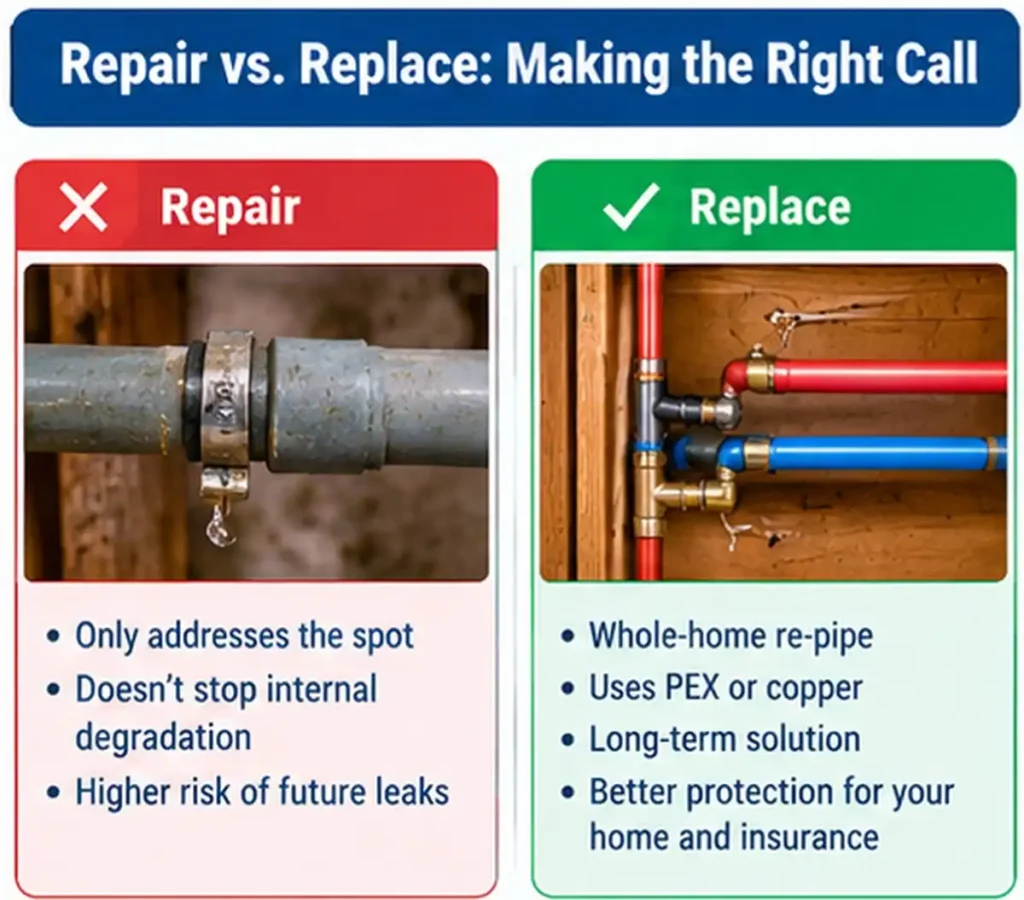
We get this question on almost every polybutylene call. Our honest answer: spot repairs buy time, but they don’t solve the problem. The rest of the system is still aging from the inside.
| Factor | Spot Repair | Whole-Home Re-Pipe |
|---|---|---|
| Upfront Cost | $200–$800 per fix | $6,000–$16,000 |
| Long-Term Reliability | Low, other sections still fail | High, 40–50+ years |
| Insurance Acceptance | Usually not enough | Accepted by most carriers |
| Resale Impact | Still flagged on inspection | Selling point |
| Peace of Mind | Temporary | Permanent |
| Best For | Emergency stopgap only | Every PB home |
When a Spot Repair Makes Sense
- You need to stop an active leak today.
- You’ve already scheduled a re-pipe.
- You’re budgeting for replacement within months.
When to Replace Right Away
- You’ve had two or more leaks.
- Your insurer is asking about pipe material.
- You’re listing the home for sale.
- You see flaking, blistering, or fitting corrosion.
Pipe Material Comparison: Choosing Your Replacement
Picking the right material is a big part of any polybutylene re-pipe in Severna Park or Idaho. Both PEX and copper are proven.
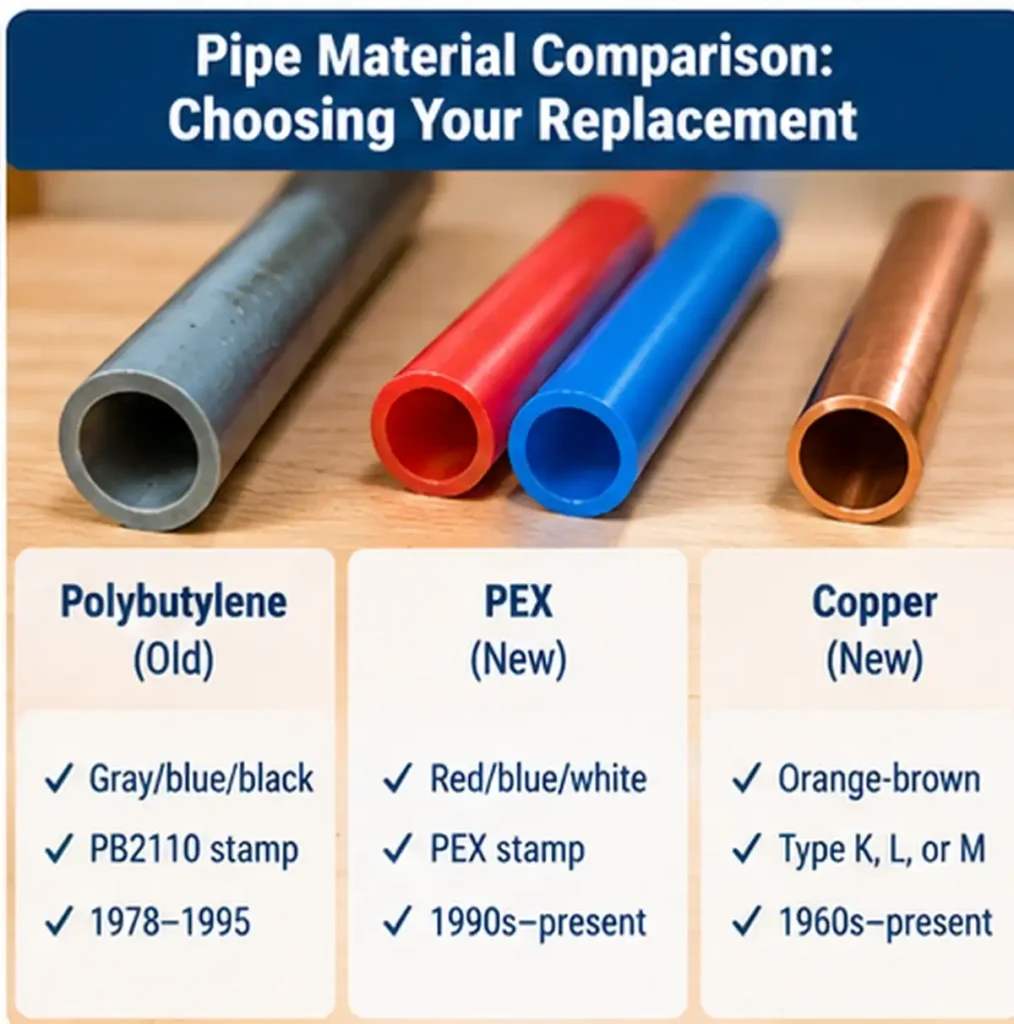
The right choice depends on budget, water chemistry, and access.
| Spec | PEX-A | PEX-B | Copper (Type L) | CPVC | Polybutylene (for reference) |
|---|---|---|---|---|---|
| Expected Lifespan | 40–50 years | 40–50 years | 50–70 years | 30–50 years | Fails early |
| Freeze Resistance | Excellent | Good | Poor | Poor | Fair |
| Chlorine Resistance | Good (rated) | Good (rated) | Good | Good | Poor |
| Hard Water Performance | Excellent | Excellent | Fair (scale, pitting) | Good | N/A |
| Install Speed | Fastest | Fast | Slow | Moderate | N/A |
| Wall Openings Needed | Fewest | Few | Most | Moderate | N/A |
| Relative Cost | $$ | $ | $$$$ | $$ | N/A |
| Code Approved | Yes | Yes | Yes | Yes | No |
PEX: Pros and Cons
Pros:
- Flexible runs mean fewer fittings and fewer leak points
- Expands slightly when water freezes
- Lower cost and faster install
- Resists scale buildup from hard water
Cons:
- Can’t be exposed to direct sunlight
- Needs rodent protection in some crawlspaces
- Some homeowners prefer metal for resale perception
Copper: Pros and Cons
Pros:
- Longest track record in residential plumbing
- Naturally antimicrobial
- Recyclable and highly durable
Cons:
- Higher material and labor costs
- Prone to pinhole leaks in aggressive water
- More wall openings during install
In our Treasure Valley work, PEX-A is our most common recommendation. It handles hard water and freezing temperatures well. For most families, it’s the best value.
Insurance and Home Sale Implications
This is where polybutylene hurts homeowners the most. The pipe might be holding up fine, but the paperwork says otherwise.

How Insurers Treat Polybutylene
| Insurance Issue | What Happens |
|---|---|
| New policy applications | Some carriers decline PB homes outright |
| Existing policies | Carriers may surcharge or non-renew |
| Water damage claims | May be denied or limited if PB was known |
| Proof of re-pipe | Often restores standard rates and coverage |
What to do:
- Ask your agent directly whether PB affects your policy.
- Keep permits, invoices, and inspection sign-offs after a re-pipe.
- Send proof of replacement to your insurer right away.
How Polybutylene Affects a Home Sale
A home inspector will flag polybutylene every time. That leads to one of three outcomes:
- Buyer asks for a price reduction equal to or above the re-pipe cost.
- Buyer requests a re-pipe before closing, under a tight timeline.
- Buyer walks away, especially if their lender or insurer balks.
| Selling Scenario | Likely Result |
|---|---|
| Re-piped with permits on file | Smooth sale, a plus in listings |
| PB disclosed, not replaced | Negotiation, often a bigger discount |
| PB discovered during inspection | Deal delays or cancellation |
Completing a polybutylene re-pipe Severna Park buyers can verify is one of the smartest pre-listing moves you can make. It turns a red flag into a selling point.
Maintenance Checklist While You Plan Your Re-Pipe
Not ready to re-pipe this month? Lower your risk in the meantime.
- ✅ Set pressure under 80 psi with a pressure-reducing valve
- ✅ Replace old supply lines to toilets and faucets
- ✅ Install leak sensors near the water heater and washer
- ✅ Insulate exposed pipes before winter
- ✅ Know your main shutoff and test it twice a year
- ✅ Check your meter monthly for silent leaks
- ✅ Consider an automatic shutoff valve for extra protection
If a line bursts before your re-pipe date, shut off the main and call an emergency plumber right away. Every minute counts once water reaches drywall and flooring.
FAQs
Is polybutylene pipe dangerous to drink from?
Polybutylene isn’t generally considered a drinking water health hazard. The main risk is sudden leaks and water damage, not contamination. Still, flaking pipe and corroded fittings can affect water quality over time.
How long does a polybutylene re-pipe take?
Most homes take 2 to 5 days. Larger homes or those with finished ceilings can take up to a week. Many crews restore water each evening.
Can I replace only the leaking sections?
You can, but it’s a short-term fix. The rest of the system is still degrading. Insurers and buyers usually want a full re-pipe.
Will I need to move out during the work?
Usually no. Expect brief water shutoffs and some noise. Most families stay home throughout.
Does the class-action settlement still pay for replacement?
No. The claims deadline for the national settlement has passed. Replacement costs now fall to the homeowner.
Is PEX or copper better for a polybutylene re-pipe in Severna Park?
Both work well. PEX is usually faster and cheaper. Copper lasts longer but costs more. Local water chemistry and budget should guide the choice.
Does homeowner’s insurance cover a re-pipe?
Almost never. Insurance covers sudden damage, not planned upgrades. A re-pipe can, however, lower premiums or restore coverage.
How do I know if my home has polybutylene?
Check near the water heater and main shutoff for gray pipe stamped “PB2110.” Homes built from 1978 to 1995 are the most likely candidates.
The Bottom Line
Polybutylene pipe is a problem that only gets worse. It won’t heal. It won’t pass an inspection. And it can fail without warning. A planned re-pipe gives you control over cost, timing, and mess.
At Meridian Plumbing Services, we believe in honest advice and transparent pricing. Whether you’re weighing a polybutylene re-pipe in Severna Park or replacing gray pipe in a Treasure Valley home, the right move is the same. Replace it on your schedule, not the pipe’s.