

A burst pipe can push out hundreds of gallons of water in a few hours. Your floors, drywall, and insulation soak it up fast. Every minute before you shut the water off adds to the repair bill. This article covers burst pipe repair Meridian ID homeowners can count on: why pipes fail, what to do in the first 30 minutes, what repairs cost, and how to keep it from happening again.
Key Takeaways
- Shut off your main water valve first. Find it before winter so you can close it in seconds during a burst.
- Most burst pipe repairs cost $250 to $1,500 when caught early. Water damage cleanup costs far more than the plumbing fix itself.
- Freeze-thaw cycles cause most winter bursts in the Treasure Valley. Insulating exposed pipes and draining hose bibbs prevents the majority of them.
Why Pipes Burst in Idaho Winters
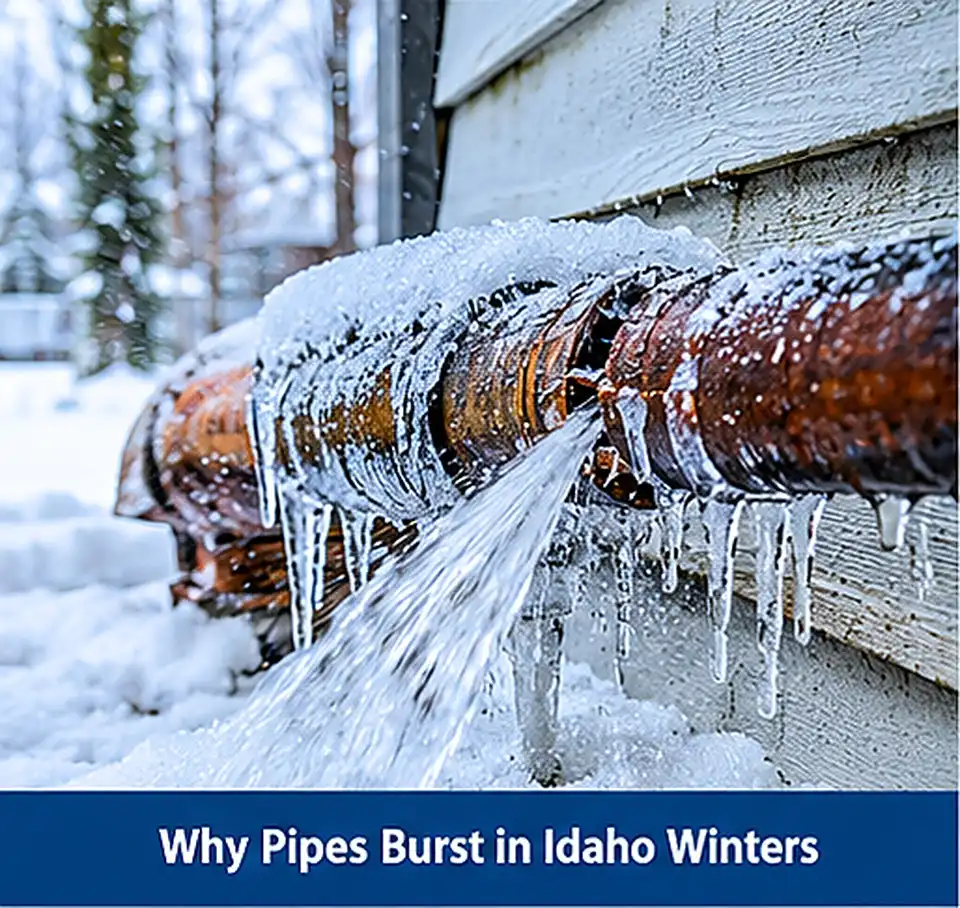
Pipes burst because frozen water expands. Water grows about 9% in volume when it turns to ice. That expansion builds pressure inside the pipe until the weakest point gives way.
The crack often shows up away from the ice itself. Pressure gets trapped between the ice blockage and a closed faucet, so the pipe splits in a section that looks perfectly normal. If you’ve spent a winter in Idaho, you know a single cold night rarely does it. The damage comes from repeated freeze-thaw cycles.
Check Also: How Water Softener Installation Kuna ID Protects Your Pipes, Water Heater, and Wallet
How Freeze-Thaw Cycles Weaken Pipes
Freeze-thaw cycles fatigue pipe walls over time. Treasure Valley winters swing from daytime highs above freezing to overnight lows in the teens. Each swing expands and contracts the pipe material.
On recent service calls in Meridian, we found hairline cracks that formed over several winters before they finally split. The pipe held for years. Then one cold snap finished it off.
| Outdoor Temperature | Freeze Risk for Unprotected Pipes | What We Recommend |
|---|---|---|
| Above 32°F | Low | Normal use |
| 28°F to 32°F | Moderate (exterior walls, crawl spaces) | Open sink cabinets on outside walls |
| 20°F to 27°F | High | Drip faucets on exterior walls overnight |
| Below 20°F | Very high | Drip faucets, keep heat at 55°F or higher, check crawl space vents |
| Below 0°F | Severe | All of the above, plus monitor garage and attic lines closely |
Other Causes of Burst Pipes
Cold is the top cause, but not the only one. Our crews see several other triggers across the valley.
- Hard water corrosion: Treasure Valley water carries calcium and magnesium. Over decades, mineral buildup and corrosion thin copper pipe walls and create pinhole leaks that can rupture.
- High water pressure: Pressure above 80 PSI strains joints and fittings. Many homes need a working pressure-reducing valve (PRV).
- Aging materials: Galvanized steel and polybutylene pipes fail far more often than modern materials.
- Soil movement: Shifting ground stresses underground supply lines and slab plumbing.
- Physical damage: Nails, screws, and remodeling mistakes puncture pipes inside walls.
Our plumbers frequently see this in older Boise homes: galvanized lines that are rusted inside, plus a failed PRV. That combination is a burst waiting to happen.
| High-Risk Location | Why It Freezes | Common in |
|---|---|---|
| Crawl spaces | Cold air enters through vents | Older Boise and Nampa homes |
| Exterior walls | Thin or missing insulation | Homes built before 1990 |
| Garages | Unheated, with large doors | Most Meridian subdivisions |
| Attics | No heat, high air movement | Homes with attic-routed lines |
| Hose bibbs | Exposed directly to outdoor air | Every home without frost-free spigots |
| Under kitchen sinks | Cabinets block warm air | Sinks on outside walls |
Next step: Walk your home this week and note every pipe in these six locations.
Warning Signs of a Frozen or Burst Pipe
Frozen pipes give warnings before they burst. Catching them early turns a major water emergency into a simple thaw-and-inspect visit.
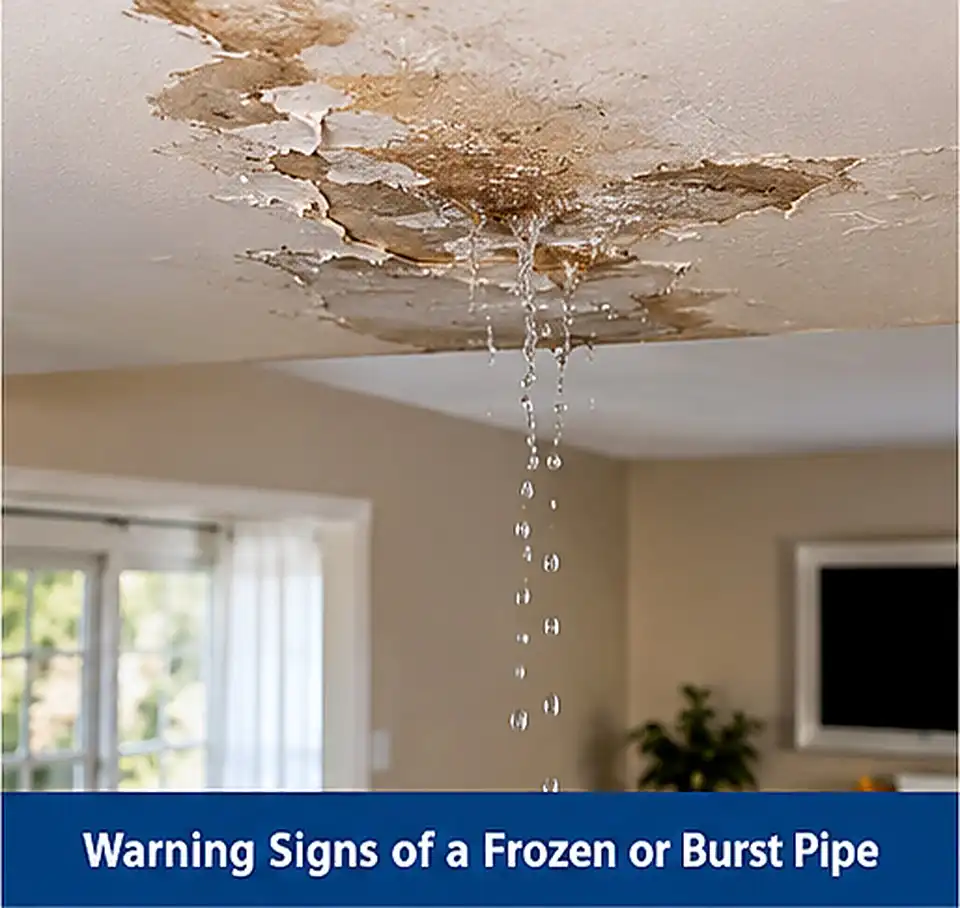
Watch for these signs, especially after a cold night below 20°F.
- Low or no water flow from one faucet while others work
- Frost on exposed pipes in crawl spaces or garages
- Bulging or misshapen pipe sections
- Strange smells from drains (blocked lines push odors back up)
- Gurgling or banging when you turn on a tap
- Water stains on ceilings or walls
- Puddles near the water heater, under sinks, or along baseboards
- A spike in your water bill with no change in use
- Running water sounds when every fixture is off
| Warning Sign | What It Usually Means | Urgency |
|---|---|---|
| No water at one fixture | Frozen line, not burst yet | High: thaw within hours |
| Frost on the pipe | Active freezing | High |
| Bulging pipe | Ice pressure building | Urgent: shut water off |
| Ceiling stain spreading | Active leak above | Urgent |
| Water spraying or pooling | Confirmed burst | Emergency: shut main now |
| Higher water bill | Hidden slow leak | Schedule inspection soon |
A frozen pipe that hasn’t burst yet is the best call you can make. We can thaw it safely and check for cracks before water ever reaches your floors.
Next step: If you see frost or a bulge, shut off the water to that line before you try anything else.
Check Also: How Water Line Repair Meridian ID Protects Your Home and Keeps Your Water Bill in Check
What to Do Right Now When a Pipe Bursts
The first 30 minutes decide how much damage you face. Fast action limits water spread, protects electrical systems, and keeps restoration costs down. Follow these steps in order.
- Shut off the main water valve. Turn it clockwise until it stops. This stops the flow to the entire house.
- Turn off the water heater. Switch gas units to “pilot” or cut power to electric units at the breaker.
- Cut power to wet areas. Flip the breaker for any room where water touches outlets, cords, or appliances. Never stand in water to reach a panel.
- Open faucets to drain the lines. Open the lowest faucet in the house first, then cold taps upstairs. This relieves remaining pressure.
- Move valuables and furniture. Lift items off wet floors and away from dripping ceilings.
- Remove standing water. Use towels, buckets, or a wet/dry vac.
- Document everything. Take photos and video of the burst, the water, and damaged items for your insurance claim.
- Call a licensed plumber. Our emergency plumbing team answers 24/7 and typically arrives within 1 to 2 hours for urgent calls in Meridian.
Where to Find Your Main Shutoff Valve
Most Treasure Valley homes have the main shutoff in one of four places. Knowing yours saves critical minutes.
| Home Type | Most Common Shutoff Location |
|---|---|
| Newer Meridian builds (slab) | Garage wall near the water heater or utility area |
| Homes with crawl spaces | Inside the crawl space where the line enters |
| Homes with basements | Basement wall facing the street |
| All homes (backup option) | Curb stop or meter box near the street (may need a meter key) |
Do’s and Don’ts After a Burst
Do:
- Keep the main valve closed until a plumber finishes repairs
- Run fans and open windows to start drying
- Call your homeowners insurance the same day
Don’t:
- Use a torch or open flame to thaw pipes (fire risk)
- Turn the water back on to “test” the pipe
- Use electrical devices in standing water
- Wait to see if the leak “stops on its own”
Next step: Tape a label on your main shutoff valve today so anyone in your home can find it.
How We Handle Burst Pipe Repair in Meridian ID
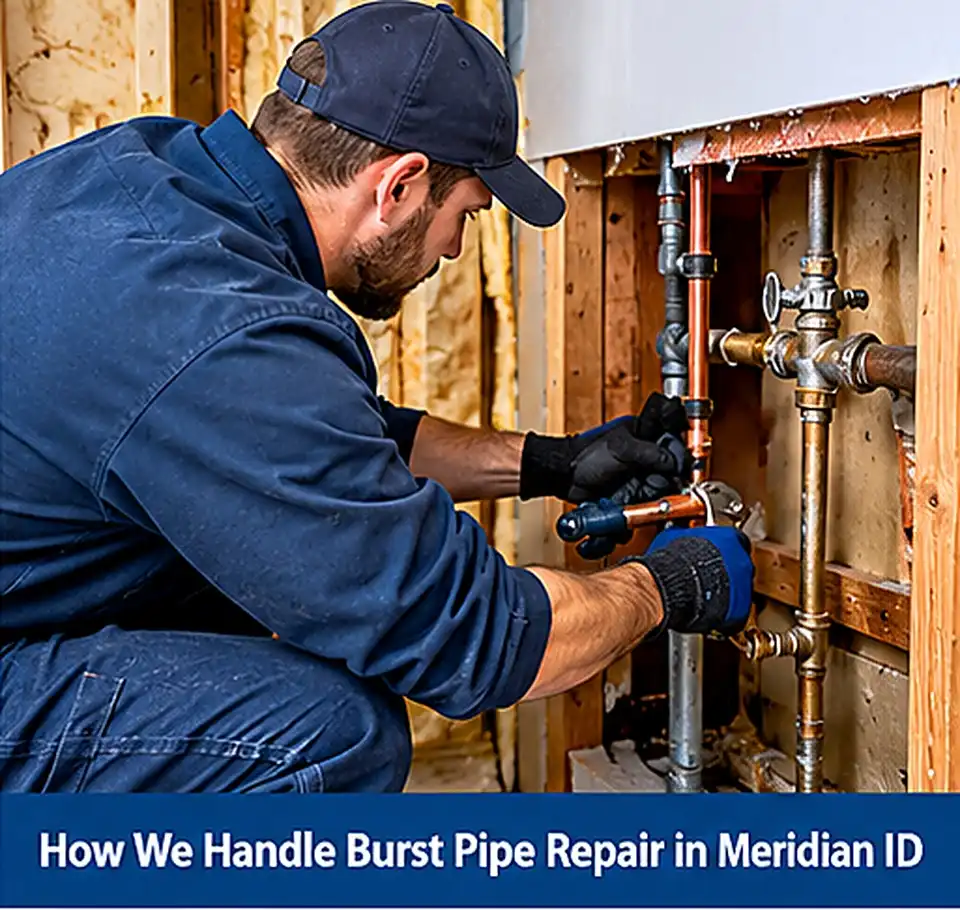
Good repair starts with finding the full extent of the damage. A visible split is often just one of several weak spots. At Meridian Plumbing Services, our burst pipe repair Meridian ID process follows the same five steps every time.
- Locate the break. We use moisture meters, thermal imaging, and acoustic leak detection to pinpoint damage behind walls and under floors.
- Assess nearby sections. Freeze damage rarely stays in one spot. We check the pipe on both sides of the break.
- Give you upfront pricing. You see the cost before we start. No hidden fees.
- Make the repair. We choose the method based on pipe material, location, and condition.
- Pressure-test the system. We restore water and test for leaks before we close any walls.
Repair Methods Compared
The right repair depends on how much pipe is damaged. A small crack needs a different fix than a line that has failed in several places. For smaller cracks and pinholes, our pipe leak repair service often handles the job in a single visit.
| Repair Method | Best For | Durability | Typical Time |
|---|---|---|---|
| Repair clamp | Small cracks, temporary fix | Short-term | Under 1 hour |
| Push-fit coupling | Single clean break on copper, PEX, or CPVC | Long-term when installed correctly | 1 to 2 hours |
| Section replacement | Split or bulged pipe up to several feet | Permanent | 2 to 4 hours |
| Partial repipe | Multiple failures in one zone | Permanent | 1 to 2 days |
| Whole-home repipe | Galvanized, polybutylene, or widespread corrosion | Permanent (40+ years) | 2 to 5 days |
A clamp is a bandage, not a cure. We use clamps to stop water during an emergency, then return for a permanent fix.
Next step: Ask any plumber which method they plan to use and why before they start work.
Burst Pipe Repair Cost in Meridian ID
Most burst pipe repairs cost between $250 and $1,500. Location matters more than the break itself. A crack under a sink costs far less than a split inside a finished ceiling or under a concrete slab.

These ranges reflect typical Treasure Valley pricing for burst pipe repair Meridian ID homeowners. Your final cost depends on access, materials, and timing.
| Repair Type | Typical Cost Range | What Drives the Price |
|---|---|---|
| Exposed pipe repair (under sink, garage) | $250 – $600 | Easy access, minimal parts |
| Crawl space repair | $350 – $900 | Tight access, possible insulation work |
| Behind drywall | $500 – $1,500 | Opening and closing the wall |
| Inside ceiling | $600 – $1,800 | Ceiling access, extra water damage |
| Slab leak repair | $2,000 – $4,500+ | Concrete work or rerouting |
| Outdoor/underground supply line | $1,000 – $4,000+ | Excavation depth and length |
| Partial repipe | $1,500 – $5,000 | Number of fixtures in the zone |
| Whole-home repipe | $5,000 – $15,000+ | Home size, material choice |
| After-hours emergency fee | $100 – $300 added | Nights, weekends, holidays |
Plumbing Repair vs. Water Damage Costs
The water damage usually costs more than the plumbing. A small fix can turn into a large restoration bill if water sits for days.
| Cost Category | Typical Range |
|---|---|
| Plumbing repair only | $250 – $1,800 |
| Drywall and paint repair | $500 – $3,000 |
| Flooring replacement | $1,500 – $8,000+ |
| Professional water extraction and drying | $1,500 – $5,000 |
| Mold remediation | $1,500 – $6,000+ |
Does Insurance Cover Burst Pipes?
Most homeowners policies cover sudden, accidental bursts. Coverage gets tricky in a few situations.
- Usually covered: Sudden bursts and the resulting water damage
- Often denied: Damage from slow, long-term leaks
- Often denied: Bursts in homes left unheated during winter
- Rarely covered: The cost to replace old pipes that caused the failure
Next step: Call your insurance agent and ask how your policy handles frozen pipe claims before winter arrives.
Repair vs. Replace: Making the Right Call
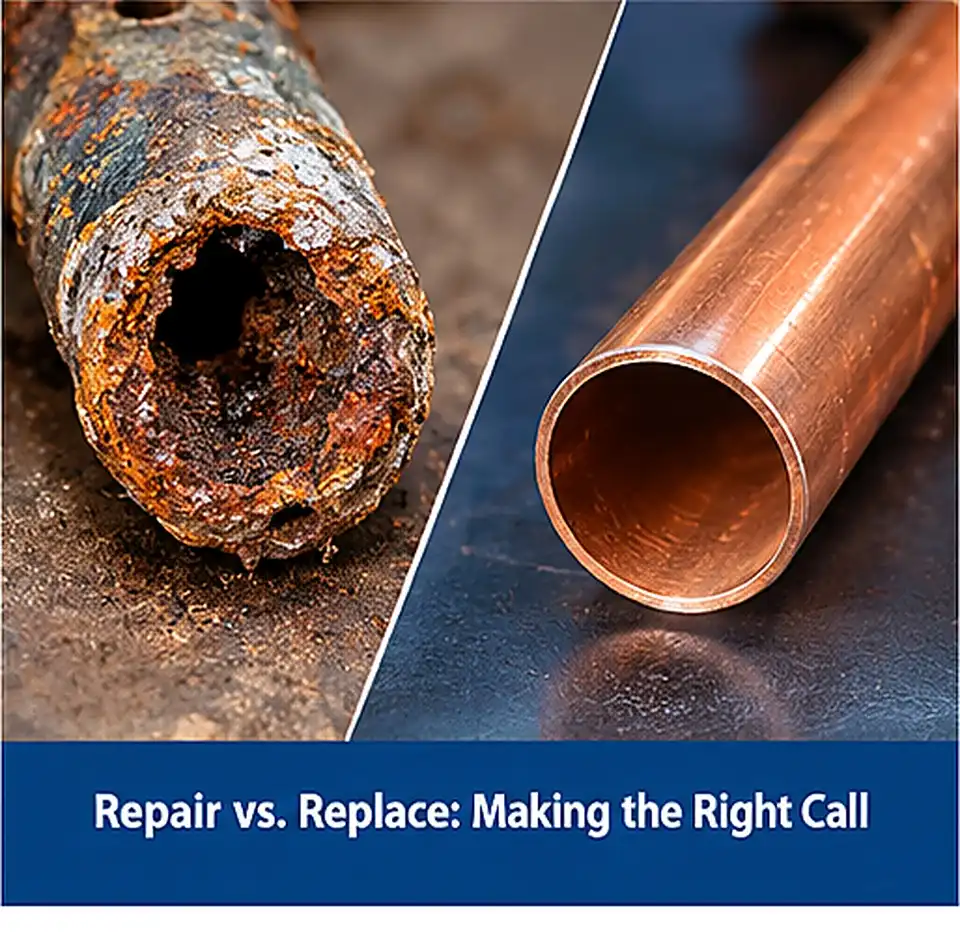
Repair makes sense for isolated damage. Replacement makes sense for systemic failure. The deciding factors are pipe age, material, and how many leaks you’ve had.
| Factor | Repair the Section | Replace or Repipe |
|---|---|---|
| Pipe age | Under 25 years | Over 40 years |
| Material | Copper, PEX, CPVC | Galvanized steel, polybutylene |
| Leak history | First leak | 2 or more leaks in 3 years |
| Water quality | Clear water | Rust-colored or metallic-tasting water |
| Water pressure | Normal | Low throughout the house |
| Corrosion | Localized | Visible along long runs |
| Upfront cost | Lower | Higher |
| Long-term cost | Can rise with repeat repairs | Lower over time |
Pros and Cons of Spot Repairs
Pros:
- Lower upfront cost
- Fast, often same-day completion
- Minimal wall and floor disruption
Cons:
- Doesn’t fix aging pipes elsewhere
- Repeat failures can cost more than a repipe
- Older systems may have hidden weak spots nearby
Pros and Cons of Repiping
Pros:
- 40 to 50+ years of reliable service
- Better water pressure and water quality
- Can raise home value and ease insurance concerns
Cons:
- Higher upfront investment
- Several days of work and drywall patching
- Requires planning around your household schedule
On recent service calls in Meridian, we’ve helped homeowners who paid for three separate repairs in two years. A repipe would have cost them less overall. If you’re on your second burst, it’s time to talk about replacement.
Next step: Count the leaks you’ve had in the last three years. Two or more means you should get a repipe quote.
Pipe Material Lifespans and Freeze Resistance
Pipe material decides how well your plumbing survives Idaho winters. Some materials flex under freezing pressure. Others crack. Here’s how common materials compare.
| Pipe Material | Typical Lifespan | Freeze Resistance | Hard Water Performance | Notes |
|---|---|---|---|---|
| PEX | 40 – 50 years | High (flexes before splitting) | Excellent | Our top choice for repipes |
| Copper (Type L) | 50 – 70 years | Moderate | Fair (pinholes over time) | Durable but splits when frozen |
| CPVC | 50 – 75 years | Low (brittle in cold) | Excellent | Common in 1980s to 2000s homes |
| Galvanized steel | 40 – 60 years | Moderate | Poor (rusts inside) | Replace if you still have it |
| Polybutylene | 10 – 20 years | Poor | Poor | Known for failure; replace |
| PVC (drain lines) | 50 – 80 years | Low | Excellent | Drain and vent use only |
| Cast iron (drain lines) | 75 – 100 years | Moderate | Fair | Common in older Boise homes |
PEX handles freezing better than any rigid pipe. It expands when water freezes inside it, then returns to shape. That flexibility is why we recommend PEX for crawl space and exterior wall runs. No pipe is freeze-proof, though. Even PEX can fail after repeated deep freezes.
Next step: Check the pipes near your water heater. The material there usually matches the rest of your home.
How Water Damage Spreads After a Burst
Water damage gets worse by the hour. Fast drying is the difference between a simple cleanup and a full mold remediation. This timeline shows what happens when water sits.
| Time After Burst | What Happens |
|---|---|
| First hour | Water spreads across floors and into walls |
| 1 to 24 hours | Drywall swells, wood floors start cupping, furniture stains |
| 24 to 48 hours | Mold growth begins on damp surfaces |
| 48 hours to 1 week | Wood warps, odors set in, mold spreads |
| Over 1 week | Structural damage, serious health risks |
Leaks waste more than money. According to the U.S. EPA, household leaks waste more than 1 trillion gallons annually, and the EPA WaterSense program notes that a typical home’s leaks can waste nearly 10,000 gallons a year. A burst pipe can release that much in a single day.
Next step: Start drying wet areas immediately, and call a restoration company if water reached drywall or flooring.
Burst Pipe Prevention Checklist for Treasure Valley Homes
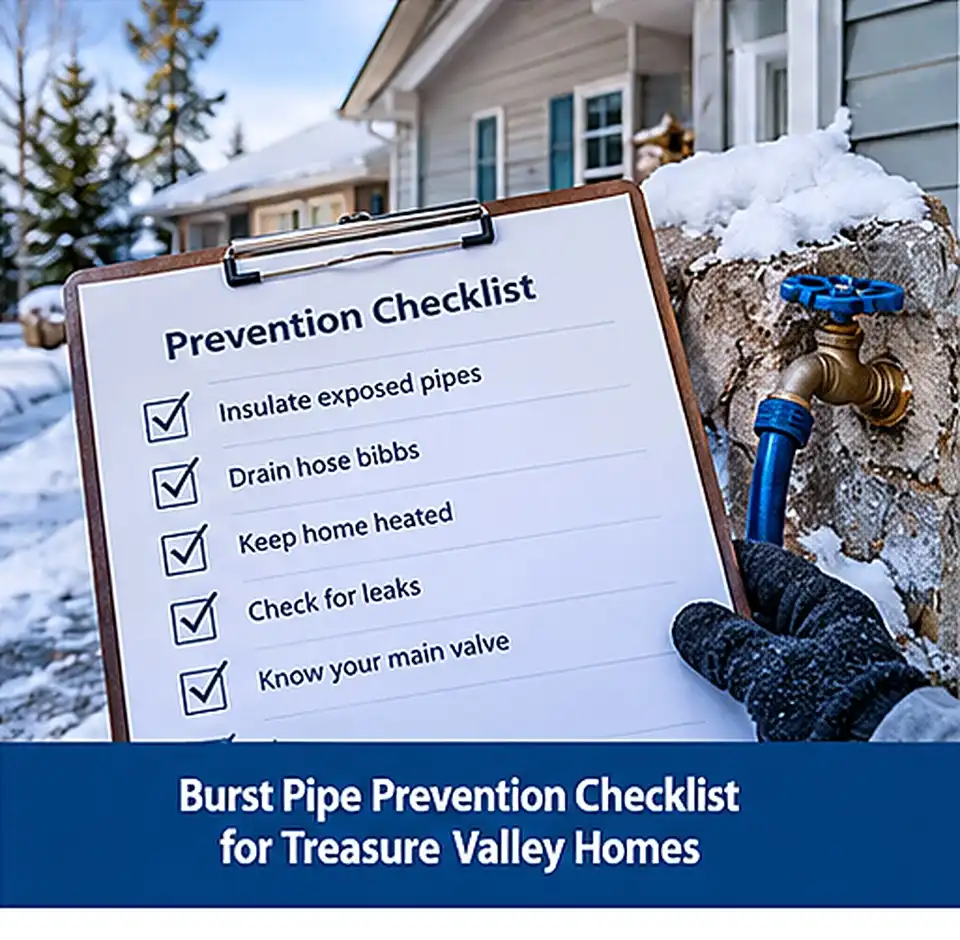
Prevention costs a fraction of repair. Most of these steps take minutes and cost under $50. If you’ve spent a winter in Idaho, protecting your pipes makes complete sense.
Fall Checklist (Do This by Early November)
- Disconnect garden hoses from every outdoor spigot.
- Drain and shut off hose bibbs using the interior shutoff valve.
- Install insulated faucet covers on all outdoor spigots.
- Blow out your sprinkler system. Many Meridian subdivisions shut off pressurized irrigation in mid-October, so schedule this now.
- Insulate exposed pipes with foam pipe sleeves in crawl spaces, garages, and attics.
- Seal crawl space vents or install vent covers.
- Seal gaps where pipes enter exterior walls.
- Test your main shutoff valve to make sure it turns freely.
- Check your water pressure. Anything over 80 PSI needs a PRV adjustment or replacement.
During a Cold Snap (Below 20°F)
- Drip faucets on exterior walls, both hot and cold.
- Open cabinet doors under kitchen and bathroom sinks.
- Keep the thermostat steady day and night. Don’t drop it more than a few degrees overnight.
- Keep the garage door closed if water lines run through it.
- Add heat tape to high-risk pipes (follow the manufacturer’s instructions closely).
Leaving Town in Winter
- Set the thermostat to 55°F or higher.
- Shut off the main water valve and drain the lines for long trips.
- Ask a neighbor to check your home every few days.
- Install a smart leak detector or automatic shutoff valve for alerts.
Next step: Pick one item from the fall checklist and finish it this weekend.
Service Areas: Burst Pipe Repair Across the Treasure Valley
We respond to burst pipes across the entire Treasure Valley. Each community has its own common plumbing patterns, and our crews know them well. Whether you need burst pipe repair Meridian ID service or help in a nearby town, the same team shows up.
| Service Area | Common Burst Pipe Issues We See |
|---|---|
| Meridian | Garage-routed lines, hose bibbs, failed PRVs in newer builds |
| Boise | Galvanized pipes, crawl space freezes, cast iron drains in older homes |
| Nampa | Crawl space lines, aging copper, polybutylene in some 1980s homes |
| Eagle | Long underground supply lines, attic plumbing in larger homes |
| Kuna | Exposed lines in rural properties, well and pump line freezes |
| Caldwell | Older housing stock, corroded supply lines |
When the Problem Goes Underground
Some bursts happen below ground, not inside walls. Frozen or shifted soil can crack main supply lines and drain lines running to the street. If a break affects your outdoor drain or you notice sewage odors, soggy patches in the yard, or slow drains throughout the house, our sewer line repair team can inspect the line with a camera and recommend the right fix.
Next step: Look for unusually green or soggy spots in your yard after a hard freeze. They often point to an underground leak.
FAQs
How fast can you respond to a burst pipe?
We offer 24/7 emergency service and typically arrive within 1 to 2 hours for urgent calls in Meridian.
Can I fix a burst pipe myself?
You can stop the water and apply a temporary repair clamp. A permanent fix needs proper fittings, pressure testing, and a check of nearby pipe sections. A failed DIY repair often floods twice.
How do I thaw a frozen pipe safely?
Open the faucet, then apply gentle heat with a hair dryer, space heater, or warm towels. Start near the faucet and work toward the frozen area. Never use a torch or open flame.
How much does burst pipe repair Meridian ID homeowners pay on average?
Most pay $250 to $1,500 for the plumbing repair. Slab leaks, underground lines, and repipes cost more.
Will my insurance cover a burst pipe?
Most policies cover sudden bursts. Claims are often denied for long-term leaks or homes left unheated.
How do I know if I need a full repipe?
Consider a repipe if you have galvanized or polybutylene pipes, two or more leaks in three years, or rusty water.
What temperature causes pipes to freeze?
Unprotected pipes can freeze when outdoor temps stay below 32°F for several hours. The risk climbs sharply below 20°F.
Do you provide upfront pricing?
Yes. We give you clear, transparent pricing before any work begins.
Get Fast, Honest Burst Pipe Repair Today
A burst pipe is a problem you solve in minutes, not days. Shut off the water, cut power to wet areas, and call a licensed plumber right away. The faster you act, the smaller your repair and restoration bill.
Here’s what to remember:
- Know where your main shutoff valve is before you need it.
- Insulate and drain exposed pipes every fall.
- Repair isolated damage. Repipe aging systems.
At Meridian Plumbing Services, we’ve handled burst pipe repair Meridian ID families depend on for over a decade, with upfront pricing, same-day availability, and plumbers who explain every step in plain language. We’re locally owned, and we treat your home like our own.
Pipe burst or frozen right now? Call us 24/7 at (205) 627-7185.
What part of your home worries you most when the temperature drops? Tell us, and we’ll help you protect it before the next cold snap.